

Men's Suit Trends for 2026 and the Refined Silhouette
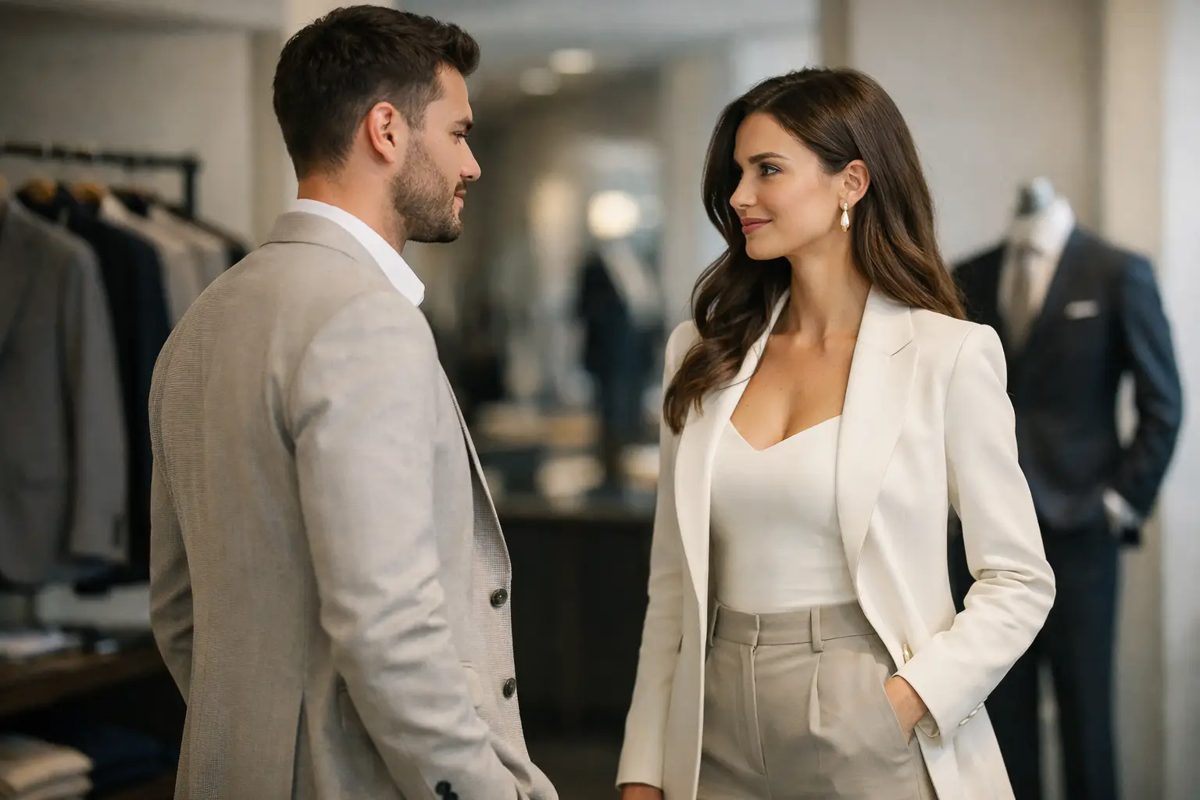
A quiet suit is sometimes the strongest statement. The men's suit trends of 2026 turn attention away from excessive detail and instant effect towards the silhouette, the character of the cloth, and how well the garment serves the man wearing it. The central idea of this season is not novelty for its own sake: the proportions of classic tailoring are being rebuilt in a more relaxed, more personal and more considered form.
This shift matters particularly to executives, entrepreneurs and men who regard their public appearance as part of their professional standing. In ready-to-wear, imitating a trend is easy; achieving a proper fit across the shoulder, chest and waist is possible only through the right relationship between measurement, construction and cloth.
The main line of the 2026 men's suit trends
In 2026 the men's suit favours quiet confidence over loud fashion. The construction of the jacket is softer than in previous years, but that does not mean shapelessness. The shoulder line looks more natural, the heavy padding in the chest is reduced, and the waist is kept under control in keeping with the build of the body. The result is a suit that looks composed and at ease both in a business meeting and at an evening reception.
This approach is not applied in the same way to every physique. On a broad-shouldered man, a very soft shoulder line can sometimes make the silhouette look heavy; on a slighter frame, a measured degree of structure gives the suit the presence it needs. This is precisely where the value of bespoke tailoring shows itself: the trend is treated not as a ready-made template but as a decision made according to the individual's proportions.
Jacket length also deserves attention. Excessively short models are no longer as relevant in the aesthetic of 2026. A length that covers the seat sufficiently, holds its line in movement, yet does not look dated and overly formal, makes a more contemporary impression. Seemingly minor decisions such as the button position, the width of the lapel and the height of the pockets determine this balance.
A silhouette built on comfort
In trousers, a fuller yet tidy line comes to the fore. A high or medium-high rise, a single or double pleat, ease through the thigh and a controlled taper towards the ankle are the logical choice for 2026. This cut creates no tension when seated and, standing, shows the line of the trouser more cleanly.
The slim trouser does not disappear entirely. But a cut that is too tight can overshadow the quality of the material and the finesse of the tailoring. A good wool cloth from a house such as Zegna or Drago should behave with life as it moves; holding it under forced tension is the wrong choice both aesthetically and practically.
The two-button single-breasted suit remains the most dependable foundation of the working wardrobe. Alongside it, the double-breasted jacket is once again taking a stronger position. The modern double-breasted model is neither wide nor stiff; it is made with a softer chest construction, balanced lapels and correct button placement. This choice creates a self-assured yet restrained appearance, particularly for formal presentations, diplomatic meetings and evening events.
The three-piece suit, meanwhile, earns its place in selected circumstances. A waistcoat gives the suit formal depth, but the warm Baku weather and a demanding work schedule must be taken into account. In the spring and summer months it may be more sensible to order it in a light, breathable wool, or to reserve the waistcoat for special ceremonies alone.
Cloth trends: texture comes before appearance
In 2026 the standing of a suit is determined first by its cloth, not by its colour. High-twist wools, open-weave tropical wool, lightweight flannel and finely textured wool-silk blends are chosen more often. They do not create a flat, lifeless surface in the light; they give the suit a depth that is felt only up close.
In a warm climate the choice of cloth is especially important. A very fine wool may appear at first glance to be the comfortable solution, but an excessively light cloth can lose its shape quickly over the course of the day. A medium-weight, well-woven wool is very often the sounder investment: it drapes more neatly, resists creasing, and adapts better to the transition between air-conditioned interiors and the open air.
In the Loro Piana and Piacenza 1733 range, softly textured materials are appealing for a sense of everyday luxury. Dormeuil, Scabal and Reda, meanwhile, open up wide possibilities for different seasons, textures and performance requirements. Here the name of the mill is not a criterion in itself. The weight of the cloth, the structure of the yarn, the density of the weave and how frequently the suit is intended to be worn must all be assessed together.
Micro-texture in cloth is one of the most refined directions of 2026. A cloth that reads as dark navy or grey from a distance but reveals a subtle mélange, a fine barleycorn or a faded windowpane up close lends the suit a quiet distinction. Choices of this kind express taste without any need for a logo or a flashy accessory.
A deeper, calmer colour palette
The navy suit keeps its place, but the 2026 palette is not limited to it. Charcoal grey, midnight blue, dark chocolate, tobacco, olive-brown and soft stone tones are seen more often. These colours are strong alternatives, particularly for daytime meetings, the autumn-winter wardrobe and less formal working environments.
The return of the brown family is no accident. Chosen correctly, a brown suit can look less expected than navy yet every bit as serious. The key issue is the temperature of the colour. A brown that is too light or too yellow can make a weak impression in a formal setting; dark cocoa, espresso or cool tobacco tones look more mature.
The role of the black suit remains specific. It is not an everyday business suit; it is the right choice chiefly for evening events, funerals and occasions where formal dress is required. For the evening, not confusing a black suit with a tuxedo (dinner jacket) is also a matter of taste: if the dress code on the invitation calls for black tie, a tuxedo with the appropriate lapel, trouser braid and correct shirt construction is the more precise answer.
The discipline of the details
The aesthetic of 2026 values precision over grand gestures. The width of the lapel should suit the structure of the face and the proportions of the body. A very narrow lapel gives many men the impression of a passing fashion, while an excessively wide lapel works only on certain silhouettes. A medium or slightly generous notch lapel remains the time-tested solution for most business suits.
In the shirt, pure cotton poplin, twill or a fine oxford weave should be chosen to suit the character of the suit. White and light blue are still the mainstays, but pale cream and light grey-blue tones create a softer transition with brown, olive and tobacco suits. The shape of the collar should be considered together with the tie knot, and the cuff together with the watch and the jacket sleeve.
Ties look more textured and less shiny. Grenadine silk, fine jacquard and seven-fold ties made of Como silk give volume to the knot and restrained richness to the surface. The pocket square should not be made from the same cloth as the suit; its job is not to repeat the colour but to add a subtle breath to the overall palette.
At Atelier Baku 1984, the logic of the bespoke commission also begins with these details: a measurement is not merely centimetres but posture, habits of movement and the scenario of daily wear. How the shoulder of the suit sits, where the sleeve ends over the watch and how the trouser breaks over the shoe directly determine long-term satisfaction.
Where the trend works for you
There is no obligation to adopt the 2026 trends wholesale. For an executive who is constantly travelling, a crease-resistant navy high-twist wool and a suit with two pairs of trousers is the more rational choice. For someone working in a more creative but still serious environment, a micro-textured tobacco double-breasted model may be more fitting. For a special day, a well-constructed tuxedo will create more value than an everyday suit.
The right suit is not the loudest example of fashion. It is the suit that clarifies its owner's standing the moment he enters the room, still looks right in photographs years later, and feels more personal with every wearing. Begin your choice with the trend, but let the final decision always rest with the proportions of your body, your way of life and the relationship you build with the cloth.