

How to Choose a Tuxedo for Events in Baku
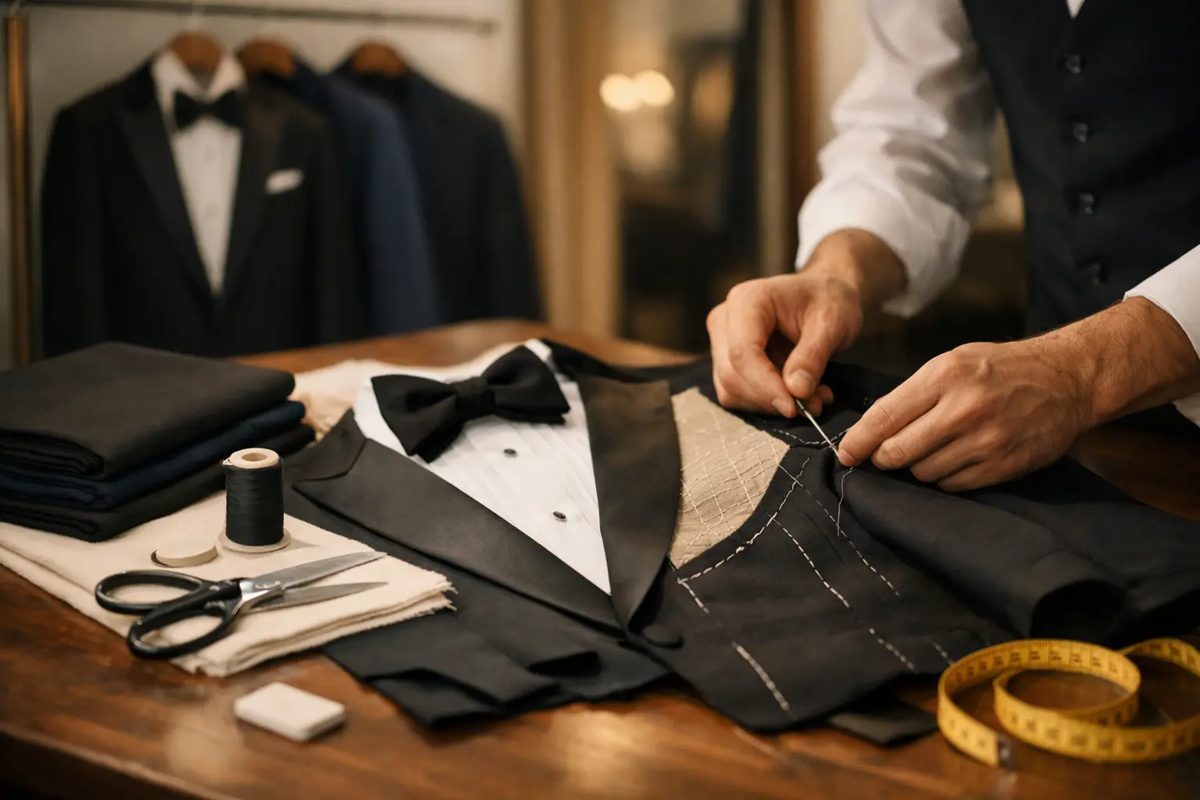
Choosing a tuxedo (dinner jacket) for events in Baku does not simply mean buying a black suit. At a reception, an embassy function, a wedding or an evening at the opera, the standard of your dress is set by the dress code on the invitation, the character of the venue and how the tuxedo sits on your body. A good tuxedo does not try to draw attention to itself. It quietly shows its owner's taste, sense of proportion and regard for detail.
In a tuxedo, even the smallest decision can change the overall tone of the appearance: the sheen of the lapel, the tone of the buttons against the cloth, the braid down the side of the trousers, the front of the shirt and the proportions of the bow tie. That is why the choice should begin not by adapting to the size of a ready-made model, but by considering the logic of the event and your own silhouette.
Which event calls for a tuxedo?
First, look at the wording of the invitation. If it says “black tie”, a classic tuxedo is the correct answer. This usually means a garment in black or midnight blue, with a shawl or peak lapel and silk details. A white shirt, a black bow tie and elegant black shoes are the essential elements of this framework.
But not every evening event is equally formal. Wedding ceremonies, private dinners and corporate banquets in Baku sometimes call for a freer language of dress. If no formal dress code is stated on the invitation, a black tuxedo remains a reliable choice, but its construction and accessories should be kept quieter. A matt grosgrain facing in place of shiny satin, for instance, or a shawl lapel in place of a very sharp peak lapel, can look more restrained.
An open-air ceremony, the summer season or a programme that begins in daylight call for a separate approach. In such cases an ivory dinner jacket, dark trousers and a black bow tie create a classic but lighter alternative. This choice, however, requires confidence that the venue and the guest list are sufficiently formal. For an evening event held in a traditional enclosed hall, a dark tuxedo is the safer option.
Colour and cloth in a tuxedo for events in Baku
A black tuxedo is universal, but midnight blue can look deeper and more alive under the lights. In evening photography in particular, this tone does not merge into black; it keeps its richness. Both choices are classic. The difference here is made not by the formality of the event but by your personal colour palette and the behaviour of the cloth.
When choosing the cloth, look not only at the first touch but at how it will hold up over the course of the whole evening. High-twist wool cloths give a clean line and better resistance to creasing. Soft merino wool is comfortable and refined, but if the quality of the construction is weak it can look tired more quickly. In the collections that mills such as Dormeuil, Scabal, Zegna, Drago and Reda produce specifically for evening wear, this balance is built with particular care.
A very thin cloth is not always the better choice. Given the temperature of enclosed venues in Baku, a long programme and a lively banquet, a medium-weight, breathable wool may be more appropriate. In summer, lightweight wool, mohair blends or selected wool-silk compositions help the garment stay cooler while preserving its formality.
Sheen in tuxedo cloth is a subject in its own right. The source of shine should be the lapel, the buttons and the trouser braid rather than the main cloth. An excessively lustrous main cloth can create the impression of a stage costume. A matt, densely woven wool is longer-lived and more convincing.
The choice of lapel defines the character of the look
The shawl lapel is the calmest and most fluid form of the tuxedo. It looks balanced particularly on a round or oval face, and is considered a restrained choice for classic wedding and reception dress. The silk or grosgrain facing of a shawl lapel gathers the sheen into a single line.
The peak lapel gives a sharper, more formal silhouette. On a man of relatively short stature it can be helpful, as it creates an upward line. On a body with broad shoulders, the width of the lapel must be calculated carefully: an excessively wide peak lapel can weigh down the proportions.
The notch lapel is not technically forbidden on a tuxedo, but in formal evening dress it is not regarded as precise a choice as the shawl or the peak. It can work at a modern, relaxed event. Nevertheless, for a first tuxedo it is more sensible to choose one of the two classic lapel styles.
Why does a bespoke cut make the difference?
The authority of a tuxedo begins, first of all, at the shoulders. The shoulder seam should sit in its proper place, the collar should hug the neck without a gap, and the chest should hold its shape without creating tension. In a ready-sized model, even when the waist, sleeve length and trouser fit happen to be right at the same time, the shoulder and collar very often become the point of compromise.
Bespoke tailoring exists to reduce that compromise. Build, posture, shoulders of different heights, the line of the waist and even everyday habits of movement all affect the cut. In a tuxedo this is especially important, because its line is cleaner and less forgiving than that of a daytime suit.
Good construction does not restrict movement. When seated, the front of the jacket should not pull; on standing, the trousers should not bunch at the knee; and the sleeves should show roughly one centimetre of shirt cuff. These nuances are visible both in photographs and in face-to-face conversation.
This is precisely where the value of a personal meeting at Atelier Baku 1984 lies: the choice of cloth is never considered apart from the measurements of the body. A jacket built in a softer Loro Piana or Piacenza 1733 cloth may require a different construction; a drier, more formally woven cloth holds the silhouette in a different way. The aim is not simply a garment that matches the measurements, but a tuxedo that looks natural on its owner.
Shirt, bow tie and shoes: the right completion
A dress shirt demands more discipline than an ordinary white shirt. A classic front — a piqué or finely pleated bib — gives the outfit depth. The cuffs should be double and finished with cufflinks. The choice of collar affects the shape of the bow tie: the classic turndown collar is versatile, while the wing collar is regarded as a more ceremonial and more selective solution.
The bow tie should be a self-tie model. The excessively symmetrical look of a pre-tied bow tie diminishes the liveliness of the tuxedo. A black silk bow tie is the most reliable choice; its size should be matched to the structure of the face and the width of the lapel. A wide bow tie on a narrow face, or a very small bow tie on a broad chest, can upset the balance.
In shoes, the black patent oxford is the most formal answer. For a softer, more contemporary approach, a highly polished, well-cared-for black oxford can also be suitable. A loafer should be chosen only when the more relaxed character of the event allows it. No belt is worn — the trousers should sit properly either with side adjusters or with buttoned braces.
Restraint is also important in the matter of the watch. A very large-cased, sporting watch spoils the refinement of the tuxedo. A thin, simple model can be chosen, but at the most formal evening invitations it is entirely appropriate to forgo the watch altogether.
Plan the timing of the commission correctly
A tuxedo is not a garment for the last day. Personal measurements, the choice of cloth, the initial cut and the adjustments all take time. A commission begun a few days before the event both limits the choice of cloth and puts the necessary fitting stages at risk.
If you are considering a tuxedo for a special evening, the right approach is to plan the meeting as early as possible. This offers more than technical convenience. It creates the opportunity to assess, calmly and together, the shape of the lapel, the detail of the buttons, the shirt and the shoes.
The most successful tuxedo is not the one that announces itself the moment it enters the room, but the garment that shows its owner's bearing more precisely. That is the choice which respects the standard of the event, is built around your body, and still looks right years later.