

How to choose executive attire in Baku
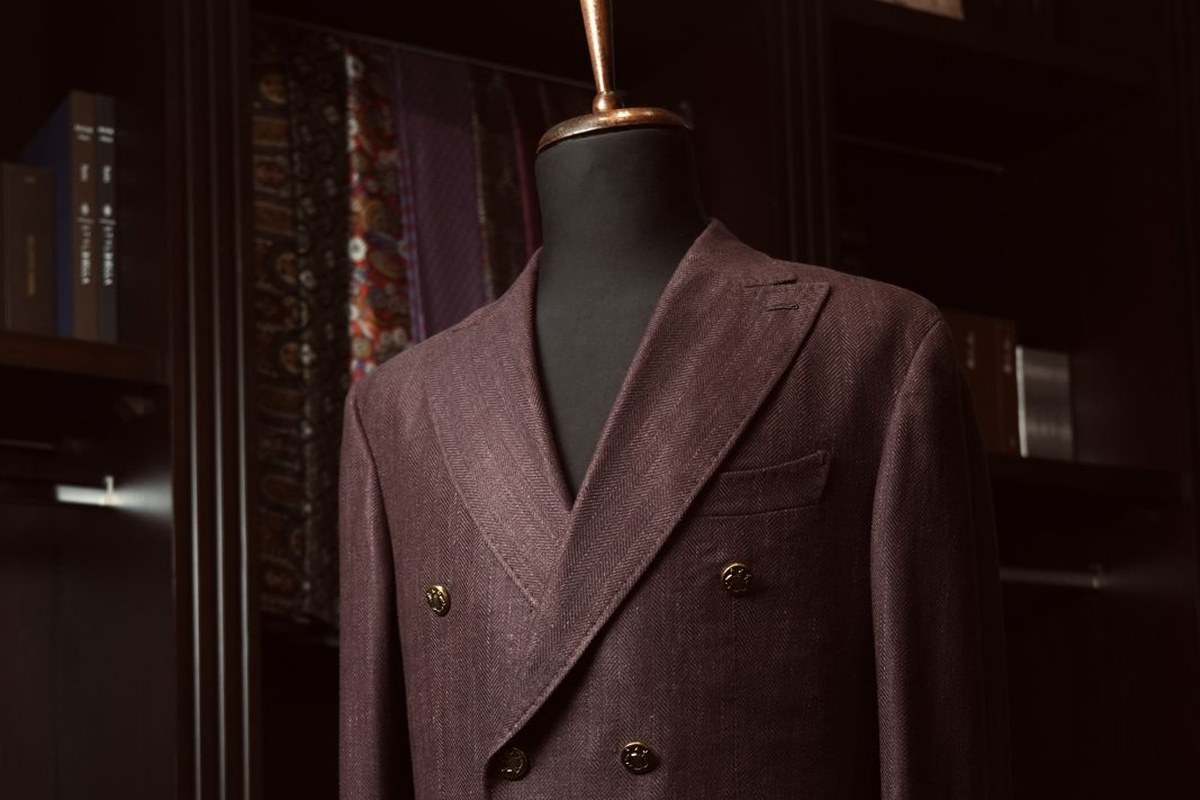
The detail that first draws attention in a meeting room is rarely the colour of a tie or the make of a watch. How the suit sits on the shoulder, the line the lapel makes against the neck, the quiet depth the cloth gives in the light — these say a great deal more. Executive attire in Baku is precisely the sum of such silent messages: clothing chosen not to display a title, but to express a position naturally.
An executive's wardrobe is not a collection of fashionable pieces. It has to work equally reliably in very different settings - a board meeting, negotiations with investors, an official reception, a business trip. The right choice is therefore not only a matter of colour and model; it is a joint assessment of cut, construction, cloth and personal way of life.
The first criterion in executive dress: a dependable silhouette
What first suggests the worth of a suit is not that it looks striking, but that it sits quietly and precisely on the body. The shoulder seam should end where the shoulder naturally ends, the lapel of the jacket should come close to the shirt collar without pressing against it, and the chest should show neither strain nor slack. These seemingly small points reveal at once whether a garment was made to order or simply chosen in a suitable size.
A ready-made suit can be a practical starting point for a man whose proportions are close to a standard pattern. But on a man with one shoulder slightly lower than the other, with long arms, an athletic build or a narrower waist, the same suit demands compromise. Sleeve length can be corrected, yet the shoulder line, the armhole and the overall balance of the jacket cannot always be brought afterwards to the level one would wish.
This is where the value of individual cutting begins. Measurement is not a matter of centimetres alone. The tailor takes account of the client's posture, his habits of movement, the rhythm of his working day and whether he wears the jacket open or buttoned more often. A suit intended for an executive must hold its shape both when he is seated and when he is speaking on his feet.
Why is construction an unseen advantage?
The inner structure of a jacket matters as much as its outward appearance. A fully fused construction may look neat at first glance, yet over time it can restrict the natural movement of the cloth. A half-canvas or full-canvas construction, by contrast, adapts to body heat, helps the lapel to sit more naturally and takes on an individual shape with wear.
There is no universal rule here. An executive who travels constantly and wears his suit all day may prefer a lighter construction. For more formal appearances and events of a protocol character, a somewhat more structured jacket may prove the better fit. What matters is that the jacket does not constrain its owner, and that the owner is not left visibly carrying his clothes.
Choosing colour for executive attire in Baku
The foundation of an authoritative wardrobe is formed by navy and charcoal grey suits. Navy looks alive in daylight and serious in the evening; for that reason it is a particularly flexible choice for negotiations, presentations and business lunches. Charcoal grey is more restrained, institutional and formal in character. It is a strong alternative for diplomatic meetings and senior corporate settings.
The place of the black suit is narrower. It suits evening ceremonies, occasions of mourning protocol and events of high formality, but it should not be regarded as the principal colour of an everyday executive wardrobe. During the day black can harden the features of the face, and in certain lights it can conceal the quality of the cloth.
There is no need to renounce pattern altogether. A fine pinstripe, a tone-on-tone micro-design or a discreet Prince of Wales check can find a place in an experienced wardrobe. But the higher the contrast of the pattern, the narrower the suit's range of use. Among the first five suits, quiet plain cloths or those of very fine texture are the more logical choice.
Balance in shirt and tie
A white poplin shirt is the most dependable option for formal meetings. Pale blue is equally professional, but reads a little softer. The choice of collar should suit the structure of the face and the knot of the tie: a medium spread gives a balanced result for most men, while a wider spread works well with a fuller knot and a more pronounced shoulder line.
The tie should not speak louder than the suit. Navy, burgundy, dark green and quiet earth tones carry quite enough character for a business wardrobe. The advantage of seven-fold ties made from Como silk lies not only in their softness; the interlining-free folded construction gives a livelier knot and a more natural drape. Even so, pairing an excessively voluminous tie with a very narrow-collared shirt and a very lightweight suit can upset the balance.
Choosing the cloth: a decision beyond the touch
The label on the cloth matters, but cloth should not be chosen for the name alone. Mills such as Loro Piana, Dormeuil, Piacenza 1733, Drago, Scabal, Reda and Zegna differ in the origin of the fibre, the quality of the yarn, the density of the weave and the techniques of finishing. The right choice depends on where and how often the client will wear the suit.
In Baku's hot season, a high-twist wool, a wool-mohair blend or a breathable open weave can make for comfort. Such cloths allow better airflow and tend to hold their shape through the day. In exchange, a very lightweight cloth can crease sooner. For a man who spends long hours at his desk or flies regularly, a mid-weight wool with natural resilience is the more rational choice.
Cashmere blends are appealing to the hand, but they are not always the most durable solution for daily use. Pure cashmere is soft and refined, yet it can be sensitive to abrasion. In an everyday business suit, performance and longevity are often worth more than softness at the first touch.
A small but considered wardrobe
For an executive, a well-built core wardrobe is worth more than numerous garments that bear no relation to one another. Two navy suits need not be identical: one may be a smooth worsted wool, the other of finer texture or lighter construction. Each then answers a different kind of working day.
The transition between business dress and smart casual deserves thought as well. A separate blazer, grey flannel trousers, a fine dark knit and a well-chosen loafer can be as appropriate as a suit for an informal lunch or a private event. But the blazer must read differently from a suit jacket: metal buttons, a softer shoulder and a textured cloth make it legible as a garment in its own right.
The choice of shoes is the quiet completion of this system. A dark brown Oxford or Derby opens up wide possibilities with a navy suit. A black Oxford is the more precise choice for charcoal, dark grey and highly formal combinations. The leather of the shoe, the refinement of its shape and regular care either complete the impression the suit makes or weaken it.
When does a bespoke order make more sense?
When body measurements do not correspond to ready-made patterns, a bespoke order is a clear advantage. But the reasons do not end there. An executive may wish to choose a particular colour palette, the button stance of the jacket, the shape of the pockets, the weight of the lining and even the way a shirt cuff sits against the watch he wears. These details are not there for luxury; they are there to improve the real use of the garment.
In a bespoke tailoring house such as Atelier Baku 1984, the consultation, the measurements and the choice of cloth are arranged as a single process. The result is not only a suit that fits the body, but a set of decisions suited to the client's professional environment. Rather than choosing over-ambitious details on a first order, beginning with one or two dependable core suits is the more far-sighted approach.
The best executive dress does not demand the attention of everyone in the room. It allows its owner to speak with ease, to move freely and to run his day without thinking about how he looks. When the cut is right and the cloth well chosen, that quiet ease becomes the clearest mark of authority.