

Choosing a Suit to Suit Your Build
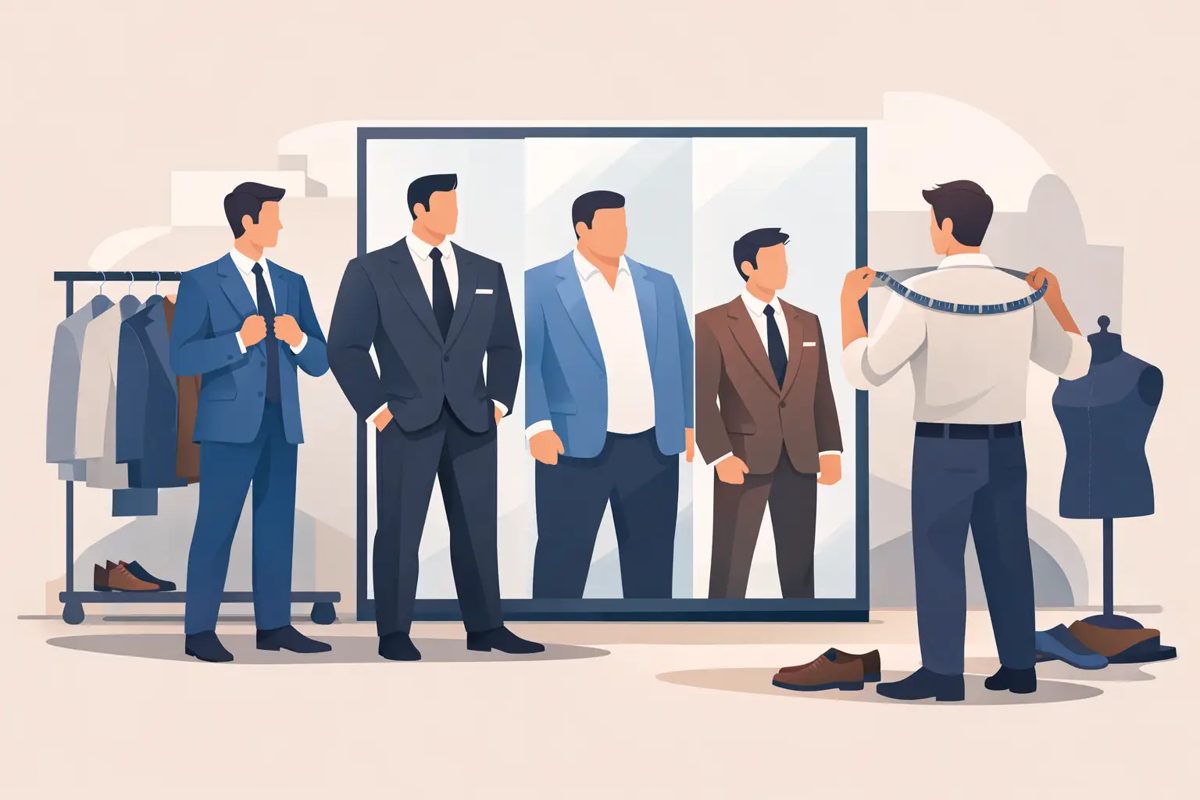
Excess cloth at the shoulder of a suit, visible tension across the stomach when the button is fastened, or a jacket that is too long are not mere details. They change the entire effect of the silhouette. Choosing a suit that suits your build is not simply about looking neater; it is about precisely managing the impression a man makes when he enters a room.
Ready-sized suits are built around a statistically average body. Yet shoulder width, chest volume, the line of the waist, the carriage of the neck and the length of the arms differ in every man. In premium tailoring, the aim is not to force the body into a standard mould, but to subordinate the pattern to the body's natural proportions. A good suit does not draw attention to itself; it serves to make its owner look more composed, more comfortable and more confident.
The main criteria for a suit that suits your build
The fit of a suit is determined first of all by the shoulder. The shoulder seam should end at the point where the natural shoulder bone ends. If it sits further out, the jacket looks borrowed; if it sits further in, it restricts movement. Because this part is difficult to correct afterwards, in a bespoke commission the shoulder is precisely where the cut begins.
The second matter is the balance between the chest and waist of the jacket. When the button is fastened, the cloth should not pull, yet at the same time it should not create excess volume around the torso. Correct waist suppression does not slim a man artificially. It builds the transition between chest, waist and hip with a calm, clear line. At business meetings and formal events in particular, this balance looks more credible than a display of strength.
Jacket length, too, is not determined by height alone. The ratio of arm, torso and leg is considered together. A very short jacket, in its attempt to lengthen the legs, may look fashionable, but in a classic wardrobe it dates quickly. An excessively long jacket, on the other hand, drags the body downwards. The best length is the one at which, with the arms hanging freely, the jacket completes the torso and does not divide the line of the leg.
The waist of the trousers should sit comfortably, create no tension through the thigh, and below the knee be neither excessively narrow nor loose. The width of the trouser hem depends on the shape of the shoe, height and overall style. Many clients confuse a narrow hem with elegance. True elegance lies in the cloth falling cleanly over the body.
The right construction for every silhouette
Broad shoulders and an athletic build
On a broad-shouldered man with a developed chest, the main risk is that the upper part of the jacket looks excessively dominant. Here a thin or natural shoulder construction gives the better result. Heavy shoulder padding can harden a line that is already strong. A lapel of medium width, a two-button fastening and controlled waist suppression preserve the proportions.
In an athletic build, the difference between chest and waist is greater. In a ready-made suit, if the size is chosen to fit the chest the waist may be left too wide, and if it is chosen to fit the waist the chest may pull. The practical advantage of the made-to-measure and bespoke approaches shows itself precisely here: the ease across the chest is preserved, while the waist is shaped without excess cloth.
A fuller build, or one where the stomach is prominent
For a fuller build, the aim is not to hide the body but to preserve the vertical flow. A jacket that is too tight creates tension around the button, while one that is too loose makes a man look larger than he is. A jacket with one or two buttons and a relatively low buttoning point can make the torso appear longer. The lapel should not be too narrow, because a narrow lapel looks out of proportion with a broad chest.
With this build, the choice of cloth plays a particular role. Matt-surfaced, medium-weight wool cloths fall more controllably into shape. An excessively shiny cloth gathers the light at the chest and stomach. A fine vertical stripe can be useful, but when the stripe is dense and assertive it has the opposite effect. Quiet navy, charcoal grey and deep brown tones are the more versatile choices.
The rise of the trousers is also important here. Low-rise trousers cut across the line of the stomach and reduce comfort when seated. Trousers made close to the natural waistline show the torso more tidily and help the shirt stay in place.
A slim, slight build
Slim men often choose a suit that is excessively narrow. As a result the suit does not complete the body; it makes it look even thinner and more strained. A modest amount of structure, a soft drape and a correct trouser hem give the silhouette presence. The jacket should be comfortable across the chest, and the sleeve should sit cleanly without constricting the shirt.
In this case, textured cloths work particularly well. Fresco wool, fine flannel, open-weave wool-cashmere blends or refined micro-patterns add visual depth to the body. But a heavy cloth is not the right decision for every season. For a man who travels frequently, from Baku to New York, the cloth's resistance to creasing, its breathability and its season of use must be assessed together.
A short or a tall silhouette
On a man of short stature, the purpose of the suit is not to lengthen the body artificially, but to avoid dividing it into parts. The buttoning point of the jacket, the size of the lapel, the break of the trousers and the transitions of colour should be in harmony. A contrasting belt, a very long jacket and an excessively large pattern can upset that harmony. A shirt, suit and shoes chosen within a single family of colour create a more unbroken line.
For a tall man, the main concern is that the suit should not be lost on the body. An excessively long jacket and a narrow lapel can stretch and weaken the proportions. A slightly wider lapel, the correct button position and a clean but not too narrow line in the trousers balance the body. For the tall client, a large check on the cloth can sometimes look successful, but that choice depends on the formality of the working environment.
Cloth speaks as loudly as the cut
The same pattern can give entirely different results in two different cloths. The soft, refined wools of houses such as Loro Piana and Zegna look fluid on the body. The livelier, structure-holding cloths in the Dormeuil, Scabal and Drago collections can preserve the shape of the jacket better in the rhythm of daily work. Neither is automatically superior. The choice depends on climate, frequency of wear, manner of movement and the visual character desired.
A very fine wool with a high Super number can be impressive in the weave, but it is not always the most practical choice for constant travel, long working days and frequent use. A medium-weight, quality wool cloth can look more durable, more comfortable and calmer. Luxury is not only fineness; it is the ability to choose the material that suits the purpose.
Lining and inner construction must also be taken into account. A full canvas jacket adapts to the body over time and offers the advantage of breathability. Half canvas can be a balanced choice for everyday use. A fully fused construction, though it looks neat at first, can in the long run restrict the natural movement of the cloth. The right decision here depends not only on budget but on how often the suit will be worn.
Why is a personal measurement more than centimetres?
Taking measurements is not a process consisting of recording chest, waist and sleeve length. The tailor observes the evenness of the shoulders, whether the neck is carried forward or back, the different position of one arm relative to the other, and the habits of walking and sitting. Sometimes a client's right shoulder sits slightly lower; sometimes the movement of the arm differs because of the dominant hand. Ready-to-wear takes no account of these nuances.
In the bespoke process, the second and subsequent checks are valuable too. A suit should be judged not on the hanger but while the man is moving. The client should sit, raise his arms, reach for his phone and fasten the button. Comfort is felt not only in front of the mirror but in the course of a real day.
This idea also underlies the approach to tailoring that has taken shape at Atelier Baku 1984: a tasteful appearance is not completed by the name of a cloth or a label; it becomes visible through a construction built to suit the body.
When going to commission a suit, think in advance about its ultimate purpose: a board meeting, a diplomatic reception, a wedding, the daily office routine or travel do not call for the same suit. Tell your tailor not only which colour you like, but how you move over the course of the day and what feeling the suit should give you. Precise questions are the most valuable choice — the one that comes before even the right cloth.