

How long does a bespoke order take? The logic of time
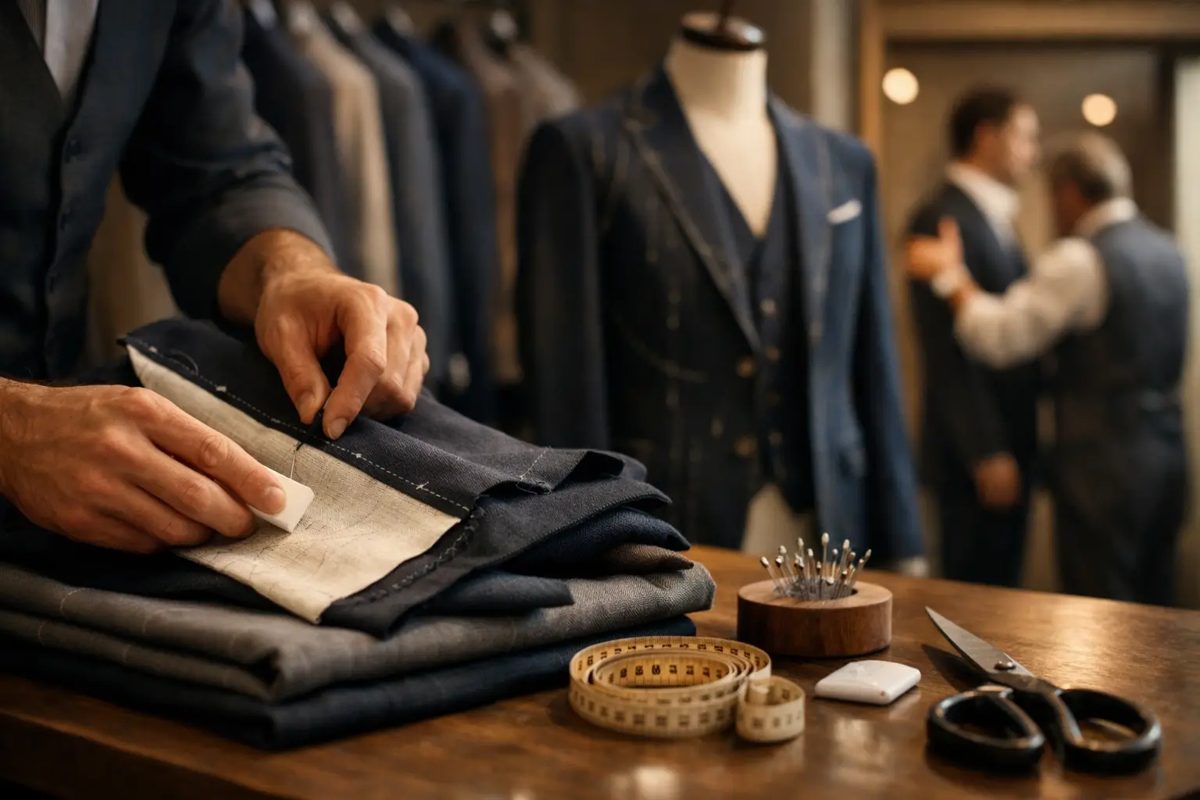
When there is an important meeting, a wedding or an official trip in the diary, the first question is usually the same: how long does a bespoke order take? The honest answer is not simply a number of days at the sewing machine. In bespoke tailoring, time is set aside for taking measurements, choosing the cloth, cutting, the first fitting and the final, precise adjustment of the silhouette. What you receive in the end is not merely a new suit, but a garment built around your body and the purpose you intend it for.
For most bespoke orders, the time from the first consultation to the final fitting is up to 4 weeks. That range, however, does not apply to every order in the same way. A two-piece business suit of straightforward construction and a ceremonial suit calling for special details, handwork and several fittings will not be ready in the same time. The availability of the cloth, the season, the atelier's workload and the time you yourself can give to fittings all directly affect the schedule.
How long does a bespoke order take, and why?
With ready-to-wear, a size is chosen and, if necessary, a minor alteration is made. In a made-to-measure service, an existing base pattern is adapted to your personal measurements. In bespoke tailoring the process begins at a deeper level: the proportions of the body, the slope of the shoulders, the shape of the back, posture, the natural position of the arm and even the way you carry a suit are all taken into account. It is precisely this attention that lengthens the time.
The aim in making a bespoke suit is not speed, but a naturalness that is felt at first glance. The collar must not press on the neck, the shoulder line must not look strained, the chest must remain free, and the trousers must hold their shape when you sit and when you move. This balance is achieved not with measurements on paper, but through construction and fittings.
A first bespoke order usually takes longer than those that follow. The tailor is establishing your master pattern and the principles of your fit. On later suits that body of knowledge can speed the process up, but each new cloth, model and purpose is still assessed on its own terms.
The main stages that shape the timeline
The personal consultation and reading the measurements
The first meeting can sometimes take more than an hour. It is not merely a technical procedure in which chest, waist and height are written down. Where the suit will be worn, the rhythm of your working day, the silhouette you prefer, your existing wardrobe and your colour preferences are all part of the conversation.
For a frequently travelling executive, for instance, a cloth from Drago or Reda with greater resistance to creasing may be the sensible choice. A client looking for a quieter, deeper-textured, seasonal wardrobe may lean towards Loro Piana or Piacenza 1733. Each of these decisions defines the character of the suit and should not be made in haste.
Analysing posture matters too. One shoulder sitting fractionally lower than the other, the structure of the back or the natural position of the waistline are details invisible in a ready-made pattern, yet they change how the suit sits. An experienced tailor reads these subtleties more by observation than by the tape.
Choosing and sourcing the cloth
If the cloth is already in the atelier, the work can be scheduled at once. If the article chosen from a Dormeuil, Scabal, Zegna or other bunch has to be ordered separately, logistics can add time. Especially at the turn of the season and in limited collections, restocking the same article can take longer than expected.
Choosing an alternative at this stage sometimes shortens the wait, but compromising on cloth quality purely for the sake of the calendar is not the right approach. The weight of the cloth, the structure of the yarn, its resilience and its surface all affect how the suit will stand. A lightweight tropical wool for summer, a flannel for winter or a high-twist travel wool behave differently even in the same cut.
The availability of materials plays a role in shirt and seven-fold tie orders as well. The pattern and colour of the Como silk must be in harmony with the suit that has been chosen. Decisions of this kind are made not for a single outfit, but for a combination that will serve in the wardrobe for a long time.
Cutting and the first fitting
Once the measurements are confirmed, the cloth is cut and the construction assembled. The first fitting is the most valuable moment of the order. The still-unfinished suit is checked on you, and the tailor sees how the lines behave on the body. A measurement that looks correct on paper sometimes needs to be adjusted again in live movement.
At the first fitting the shoulders, the way the collar sits on the neck, the width of the chest, the button point, sleeve length, the balance of the jacket's skirt and the break of the trousers are all assessed. It is not enough for the client to stand still. Natural movements such as sitting, walking and raising the arms are observed as well. The aim is a silhouette that does not restrict movement and yet stays composed.
A single fitting can be enough, but that is not the rule. If the proportions of the body are more complex, if the construction of the model calls for a special solution or if the client expresses more exacting wishes, an additional fitting is both logical and welcome. An extra appointment extends the time, but it reduces compromise in the final result.
Final sewing and fine adjustments
After the fitting the suit is completed: lining, buttons, buttonholes, the hand-finished elements and the final pressing. Haste at this stage does the most damage to the finished appearance. The roll of the lapel, the level of the pocket flaps, the opening of the sleeve and the break of the trouser leg are details that look small yet define the overall discipline of the suit.
At the final check the suit is put on once more. Sometimes a change of a few millimetres in the trouser length or a slight adjustment at the waist is needed. This is not a flaw; it is a natural part of bespoke tailoring. The garment is fitted to the person, not the person to the garment.
Can the time be shortened?
Yes, up to a point. If the date of an event is approaching, it should be stated openly at the first meeting. The atelier can then assess its work plan, the availability of cloth and the sequence of fittings accordingly. Choosing a cloth that is in stock, favouring a classic construction and arriving at fittings on time are real factors that speed up the process.
It would be wrong, however, to equate a "rush" order fully with the bespoke standard. In urgent work the choices may narrow, the opportunity for an additional fitting may shrink or certain hand-finished details may require a simpler solution. If a suit is intended for a particular date, ideally the consultation should be planned at least 4-5 weeks before the event. If this is your first bespoke experience, a wider margin of time will allow you to decide on both the cloth and the silhouette at ease.
Not every garment moves at the same pace
The suit is one of the orders that requires the most stages, but other garments have their own rhythm too. In a bespoke shirt the collar shape, cuffs, and the balance of shoulder and sleeve are what matter; the process is usually shorter. Even so, with a first shirt order the relationship between the collar, the structure of the face and the line of the neck should be chosen with care.
The seven-fold tie follows a different logic in its construction. Built without an interlining, by folding the silk itself, this model depends on the weight and drape of the fabric. Its making time can be shorter than a suit's, but the availability of the chosen Como silk must still be taken into account.
At Atelier Baku 1984 the time given to a bespoke order is not a service policy; it is a measure of the value placed on the result. It is not enough for a suit to look good on the first day; years later it must still keep its shape, its comfort and the quiet effect that suits its owner's character.
Do not calculate the order date from the day of the event alone. Give yourself time to get to know the cloth, to make decisions at the first fitting and to see that nothing in the finished garment feels hurried. In good tailoring the waiting time is not time lost; it is the time set aside for the garment to become truly yours.