

How to Choose a Dormeuil Suiting Cloth
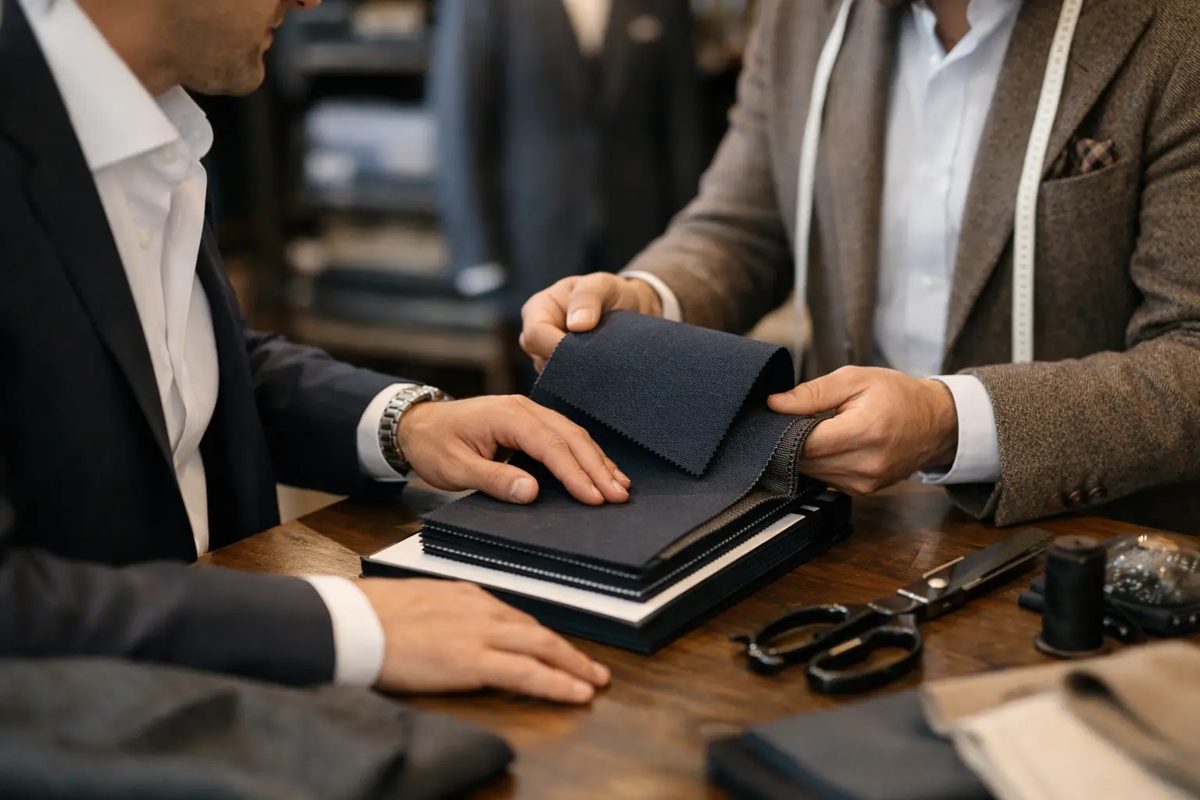
The first impression of a suit is often formed in the cloth, before the cut. A Dormeuil suiting cloth is therefore not simply a choice of colour or pattern: its weave, weight, drape and response to light determine how the suit presents its owner. Chosen well, this cloth looks restrained at a business meeting and, at close range, shows its difference to an eye familiar with the material.
The Dormeuil name is a symbol of fine wools, selected fibres and a European cloth-making tradition that stretches back many years. But the name of the house alone does not guarantee a successful result. The purpose of the cloth, the climate of Baku, how much the suit will be worn and the build of its owner must be considered together. True luxury lies precisely in that harmony.
What sets a Dormeuil suiting cloth apart?
A good suiting cloth is not merely soft. It responds to shape, keeps its neatness through the day and creates no discomfort in movement. In Dormeuil collections this balance is built with different types of wool, weave density and fibre blends. Some cloths feel drier and more structured, while others have a noticeably soft, fluid and lustrous drape.
Feeling this difference with the fingers alone is not enough. The cloth should be squeezed lightly in the palm, held up to the light and observed for its ability to recover. High-quality wool springs back quickly after being crushed, does not develop a coarse surface and does not give off excessive shine. These properties are especially valuable in suits made for long working days, travel and formal events.
Dormeuil's advantage often shows in the details: the depth of colour, the natural transition of melange tones, a pattern that looks quiet from a distance and full of character up close. Such a cloth does not demand attention. It draws attention to itself naturally.
Cloth weight changes the behaviour of a suit
Although the weight of a cloth is expressed in grams, its effect on the decision is practical. Lightweight cloths are airier and more comfortable, but may require more care in intensive daily use. Mid-weight wools are often considered the most judicious choice: they are suited to wear between seasons, and they hold the shoulder, chest and skirt line of the jacket more stably.
In a fine Dormeuil wool chosen for summer, breathability is the main criterion. But a very thin cloth is not right for every man. For those who move vigorously or spend long hours in the car or the office during the day, a somewhat more structured weave may give a better result. The cloth will crease less and the suit will still look composed towards the end of the day.
For autumn and winter suits, fuller wools, flannel or finely textured weaves are appropriate. These choices give depth to the silhouette and show particularly well in dark blue, charcoal and tobacco tones. Even so, choosing only a heavy cloth is no solution either. Given the temperature of indoor spaces in Baku and frequent travel by car, an excessively thick suit can lose its practicality.
Purpose comes before colour
The first question in front of a cloth book should not be "which colour?" The more accurate question is: for which rhythm of life is this suit being made? For an executive who attends several meetings a week, a dark blue or mid-grey, finely textured, mid-weight wool is a reliable starting point. These colours work with a variety of shirts and ties, do not look harsh in the light and do not lose their relevance as the years pass.
In a suit intended only for special occasions there is room for a bolder choice. A deep tone of dark green, chocolate brown, a fine windowpane or a delicate herringbone can express personal taste. A sense of measure is important here. The pattern should not overshadow the suit's owner; it should complete his character.
In a suit made for travel, crease resistance comes more to the fore. In daily business use, the cloth must both breathe and recover quickly. For a suit to be worn at an evening reception, the way the surface absorbs or reflects light plays a greater role. The same Dormeuil suiting cloth can leave an entirely different impression in a different construction and for a different purpose.
A high "Super" number is not always the best choice
When choosing cloth, one often hears talk of "Super 120s", "Super 150s" or higher. These numbers give a general idea of the fineness of the wool fibre. The finer the fibre, the softer and more delicate the cloth usually feels. But fineness does not automatically mean superiority.
A very fine wool can be a magnificent choice for an evening suit or a rarely worn special order. Its drape looks aristocratic and its surface exceptionally clean. But for a business suit worn every day, a sturdier wool of somewhat lower fineness, yet well woven, is often the wiser investment. It is easier to care for and takes intensive use more calmly.
Quality is not measured by the fineness of the fibre alone. The structure of the weave, the twist of the yarn, the weight of the cloth and its finishing are equally important. An experienced tailor weighs these numbers not in isolation, but together with your daily needs.
Cloth and cut are inseparable
Two suits made from the same cloth do not give the same result. The construction of the jacket, the shoulder structure, the canvas layers in the chest, the set of the sleeve and the balance of the trousers either reveal the potential of the cloth or weaken it. A soft, fluid Dormeuil cloth can lose the naturalness it seeks in a rigid construction. Conversely, a more structured wool can look heavy and lifeless without adequate support.
This is where the value of bespoke tailoring becomes clear. The choice of cloth should be made in front of the mirror, with body proportions and habits of dress in mind. A different drape may suit a broad-shouldered, athletic build, and a different cloth density a slimmer, longer silhouette. The aim is not to hide the body in cloth, but to present it in the right proportion.
At Atelier Baku 1984 such a choice is part of the personal consultation. There can be a difference between how a cloth looks in the book and the effect it creates in natural light, against the client's skin tone and with the shirt he has chosen. That is why the final decision should be made without haste, with the whole image of the suit in mind.
Care is the quiet condition of longevity
Even the finest cloth can quickly lose its quality with the wrong care. A wool suit does not need dry cleaning after every wearing. On the contrary, excessive cleaning can damage the natural elasticity and surface of the fibre. Letting the suit rest on a wide-shouldered hanger after wearing, cleaning the surface with a soft brush and airing it before the next wearing is usually enough.
The crease of the trousers, the shape of the jacket's shoulders and pockets that do not sag depend on daily habits. Not filling the pockets with heavy objects, not wearing the same suit on consecutive days and folding it properly when travelling make a real difference to the cloth. A luxury cloth requires attention, but that attention is not a difficult ritual — it is the natural form of respect for quality.
When choosing a Dormeuil cloth, there is no need to look for the finest, the most expensive or the most lustrous option. The cloth that best answers your pace of work, the circles in which you wish to be seen and the movement of your body is always the more valuable. In tailoring, taste is often not a matter of displaying the right choice, but of carrying it with composure.