

How are measurements taken for a bespoke suit? Step by step
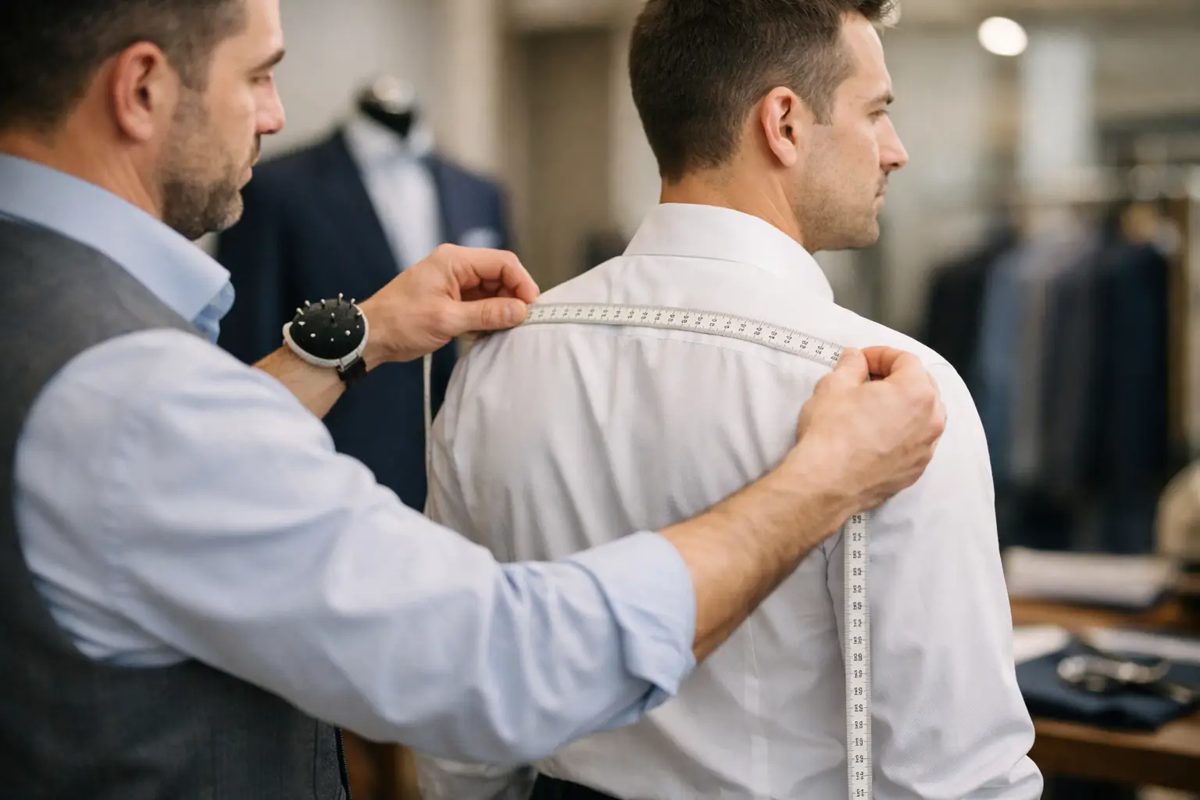
A ready-to-wear suit may fit in the chest, yet be loose at the shoulders and uncomfortable in the trousers. The reason is often simple: a body is not just a chest and a waist measurement. The answer to the question how are measurements taken for a bespoke suit begins precisely here — before the numbers on the tape, a man's posture, his movement and the purpose for which he will wear the suit are read with care.
In bespoke tailoring a good result does not simply mean a slim or close-fitting silhouette. True quality shows in comfort when sitting, in the jacket resting calmly on the shoulder, in the collar staying at the neck and in the trousers keeping their shape through the day. That is why taking measurements is not a brief technical procedure but the most responsible stage of the order.
How are measurements taken for a bespoke suit?
At the first meeting a professional tailor does not work with the tape alone. He looks at the client's natural posture: whether one shoulder sits lower than the other, whether the back is straight or rounded, whether the head leans forward, where the waist sits and how the arms relate to the body. These seemingly small differences are mostly ignored in ready-to-wear, yet they determine the overall fit of the suit.
Measurements are usually taken with the client relaxed and upright but not tense. Holding the body artificially straight or drawing in the stomach does not give the right result. A suit is made for natural, everyday movement, not for a pose frozen for display.
At the first consultation, working habits and habits of dress are discussed as well. The approach to ease of movement for an executive who spends most of the day in the car or in meetings may not be the same as the choice for a client who wears a suit rarely, but selectively, at formal events. Two men having the same chest measurement does not mean they will wear a jacket of the same cut.
The silhouette is chosen before the tape
Even when the measurements are precise, the tailor must first determine the desired silhouette. The classic British construction can give a more expressive shoulder and a structured chest. The Italian approach offers a lighter construction, a soft shoulder line and a more relaxed look. The choice depends not only on taste, but on build, professional setting and how often the suit will be worn.
On a broad-shouldered, athletic build, for example, an excessively narrow waistline can make the jacket look strained. On a slimmer frame, a well-placed waist suppression brings order and balance to the silhouette. A tall client's choice of jacket length may not suit a shorter one. There is no universal formula in tailoring, but there are rules of proportion.
Cloth influences the decision here too. The soft, fluid wools of houses such as Loro Piana and Zegna create a more natural drape. The more structured cloths in the Dormeuil, Scabal or Drago collections can hold the line of the jacket differently. The weight, elasticity and weave of the cloth can change the ease to be added to the measurements. In other words, the same pattern does not behave the same way in two different cloths.
Which measurements are taken?
The principal measurements for a suit form an interconnected system. Chest, waist and hip build the balance of the jacket's body; neck, shoulder width, back width and sleeve length serve to make the upper part look calm and clean. In the trousers, the waist, seat, thigh, knee, hem width and inside and outside leg lengths are assessed separately.
More important than the measurement itself, however, is how it is interpreted. The chest measurement, for example, is not enough on its own to ensure the jacket stays comfortable when buttoned. The tailor must also consider the shape of the chest, the need for movement across the back and the natural position of the arm. Otherwise a jacket that looks ideal standing up may pull when seated and form creases at the back.
In trousers the most overlooked detail is the seat and thigh. An excessively narrow cut restricts movement and puts strain on the cloth. Too much fullness loses the cleanness of the line. Well-made trousers do not pinch when sitting and do not gather excess cloth around the knee and thigh when standing.
Why is the shoulder line the key measurement?
Altering the shoulder of a jacket is one of the most difficult and risky interventions. That is why shoulder width and slope are determined precisely at the first stage. The shoulder seam of the jacket should sit close to the natural end of the shoulder, without drooping on the arm or bunching on top of the shoulder.
One shoulder sitting lower than the other is an entirely normal anatomical trait. A ready-to-wear suit rarely compensates for it. In a bespoke order the pattern is corrected as needed so that the collar, sleeve and shoulder line look balanced. This is one of those details that does not catch the eye at once, yet makes the suit truly personal.
The collar and the fit at the neck
The collar should sit calmly against the back of the neck. If a gap appears between neck and collar, or the jacket pulls backwards, the problem is often not the neck measurement alone. Posture, the structure of the back and the slope of the shoulders must be analysed together.
The height of the shirt collar, the size of the tie knot and even the way the client ties his tie affect this picture. Because a seven-fold tie made from Como silk can create a fuller knot, its proportion must be set against the shirt collar and the jacket's lapel. A personal look arises precisely from the correct resolution of these relationships.
What is ease, and why does it matter?
Looking for identity between the measurements and the body is the wrong approach. A suit needs a certain amount of ease for movement. That ease is calculated separately at the chest and back of the jacket, at the armhole and at the seat of the trousers.
With too much ease the suit looks wide; with too little it constricts the body. The right amount is chosen according to the client's daily movement. The needs of someone who works on his feet all day and of someone who sits at a desk for long hours and travels often are not the same. The natural elasticity of the cloth also plays a role in this decision.
Sometimes the client wants a slimmer look at first sight. The tailor's task is not to carry out that wish blindly, but to propose a proportion that will remain elegant as the years pass. Seasonal trends change; a correct shoulder, a balanced lapel and a comfortable trouser line keep their value.
The fitting stage after measuring
Taking precise measurements is the beginning of the order, not its end. In a bespoke suit especially, the first fitting is essential for seeing how the pattern behaves on the body. At this stage the jacket's shoulders, collar, chest comfort, waist suppression, sleeve length and the break of the trousers are checked.
During the fitting the client should not simply stand in front of the mirror. It is necessary to sit, to stretch the arms forward, to button the jacket and to take a few steps at a normal walking pace. The tailor reads the tension and the excess cloth that appear in these movements more accurately.
The break of the trousers over the shoe is also decided at the fitting. A choice is possible between a more classic look with a full break and a short, clean break. The shape of the shoe, the client's height and the character of the suit must be taken into account here. No single rule of fashion applies to every case.
What should the client do on measuring day?
It helps to come to the measuring in a shirt that fits the body as closely as possible without constricting it. Very thick knitwear, bulky items in the pockets or shoes with an unusually high heel can make it harder to assess proportion. Coming in a shoe close to the model you will mostly wear with the suit gives a practical advantage for the trouser length.
Speaking openly with the tailor is part of the process too. If a change in weight is expected, which movements dominate the day and whether the suit is intended for work, a wedding, a formal reception or travel should all be said. This information is as valuable as the technical measurements.
In a tailoring house built on personal consultation, such as Atelier Baku 1984, the aim is not merely to collect the right numbers. The aim is to create a pattern that suits the client's body, taste and rhythm of life, and that will still look trustworthy years later.
A good bespoke suit does not try to draw attention to itself at the first wearing. It does not hinder its owner's movements, does not lag behind the rhythm of a meeting or an event, and expresses personal taste with a precision felt only at close range. The time you give to the taking of measurements is the first investment in that quiet confidence.