

How to order a bespoke shirt
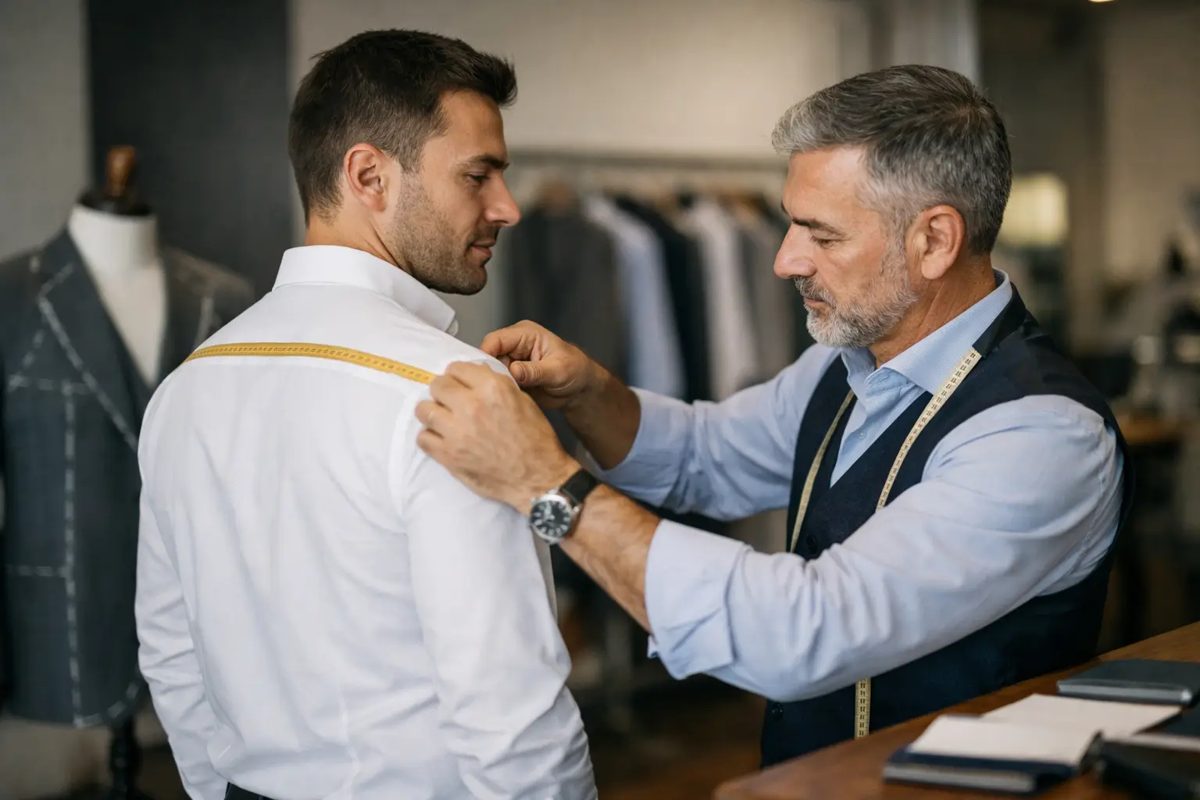
A ready-to-wear shirt may look right at the shoulder, yet its collar can pinch the neck, its sleeves fall short or excess cloth gather at the waist. These small mismatches are especially noticeable at meetings, presentations and formal receptions. A bespoke shirt order exists precisely to remove such compromises: the shirt is made not simply to a size, but to your build, the way you move and the rhythm of your daily dress.
In a man's wardrobe the quality shirt is one of the most worn and yet most often wrongly chosen garments. It is the shirt that completes the line of the suit, frames the knot of the tie and, being close to the face, has a direct effect on the overall look. A well-ordered model needs no noisy detail to make itself seen.
Where does a bespoke shirt order begin?
A good result begins with a conversation, before the tape measure. The circumstances in which you will wear the shirt are established — whether with a suit, without a jacket or in a more relaxed combination. Your working schedule, how often you travel, your habit of wearing a tie and your preferred collar shape should all be considered at the first meeting.
When measurements are taken, it is not only the chest, waist and neck that are recorded. The natural slope of the shoulders, the length of the arms, the structure of the wrists, the line of the back and posture all affect how the shirt sits. If one shoulder is slightly lower than the other, for instance, a standard-size shirt does not hide this; on the contrary, it makes it more visible. A bespoke cut can allow for this difference in the construction.
The aim here is not to create a silhouette that constricts the body. A correct fit preserves freedom of movement, yet leaves no excess volume at the chest, waist or under the arm. For a man who works at a desk during the day and then attends a formal meeting, this balance is the main criterion.
The difference between bespoke and made-to-measure
Although these two concepts are sometimes used to mean the same thing, the approach is different. Made-to-measure is the adaptation of an existing base pattern to your measurements. Compared with a standard ready-to-wear shirt this is a real advantage, and it is sufficient for many builds.
A bespoke shirt, on the other hand, requires a more individual construction. The pattern is drafted on the basis of the client's body proportions, posture and chosen silhouette. Fine details such as shoulder balance, the stand of the collar at the neck and the pitch of the sleeve are adjusted more deeply. Which choice is right depends on the purpose, the build and the level of personalisation you expect.
Choosing cloth is about more than looks
Although the colour of the cloth attracts the first attention, it is its composition, density and weave that determine the everyday quality of a shirt. High-quality cotton feels comfortable on the skin, allows air to circulate and keeps its shape with proper care. Even so, a very fine cloth is not the most logical choice for every scenario of use.
A densely woven poplin is appropriate for formal meetings and a smooth, clean look. A twill weave feels somewhat softer, is less transparent and counts as a practical choice for the business wardrobe. Oxford or a more textured cotton suits tieless combinations that are relaxed yet still neat.
The climate of Baku should also be considered when choosing cloth. In the hot months a breathable cotton of medium density gives a more comfortable result. In an air-conditioned office or in the cooler season, a somewhat fuller weave both drapes better and looks tidier through the day. A high thread count does not always mean the superior choice: an excessively fine, lustrous material can be more delicate in intensive daily use.
At Atelier Baku 1984 the choice of shirting is not a hurried decision in front of a colour card. The weave, the behaviour of the colour under light, the compatibility with suiting cloths and how often the shirt will be worn are all weighed together. This approach makes the difference clearly felt, especially for a client who knows the materials of Loro Piana, Zegna, Dormeuil and other selected European mills.
Collar and cuffs define the character of a shirt
The collar is not merely an aesthetic detail. It must be chosen to suit the shape of the face, the length of the neck, the knot of the tie and the opening of the jacket's lapels. A wide-opening spread collar looks balanced with fuller tie knots and is a strong choice in formal suit combinations. A classic collar with a narrower opening creates a calm, traditional line.
A button-down collar may suit a more relaxed style, but in a serious diplomatic or highly formal business setting it is not always the most appropriate option. The same rule applies to cuffs. A button cuff is practical for everyday use; a double cuff, worn with cufflinks, is chosen for evening events, ceremonies and occasions that call for a more formal look.
The height and stiffness of the collar matter as well. A collar that is too soft can quickly lose its shape under a tie. An excessively rigid construction can weaken the natural look. The right choice is judged not by how the shirt looks when first put on, but by whether it still holds its shape at the end of the day.
Buttons, thread and the question of the monogram
In a luxury shirt the small parts shape the overall impression. Natural mother-of-pearl buttons give a quiet gleam in the light and have a feel quite unlike plastic. Neatly cut buttonholes, durable thread and clean side seams are indicators of quality felt over the years.
The choice of monogram should be measured. Small initials worked tone-on-tone on the cuff or on the lower part of the shirt look elegant as a personal detail. A monogram in a contrasting colour on the chest, visible from a distance, can stray far from the aesthetic of classic tailoring. In this category discretion is the stronger signature.
The right shirt wardrobe for a first order
In a first bespoke order it is more rational to build a few essential models precisely than to choose a great many fashionable colours and patterns. A white poplin shirt is the foundation for formal suits, ceremonies and important meetings. A light blue model is among the most versatile choices in the business wardrobe and combines easily with navy, grey and brown suits.
A fine blue-and-white stripe or a quiet micro-pattern can add depth to the wardrobe at the next stage. But the scale of the pattern should not compete with the tie and the suiting cloth. If a shirt will be worn a great deal, it makes sense to order two or three different cloths on the same pattern. A successful pattern made for your body makes repeat orders both easier and more consistent.
The choice of colour also depends on the professional setting. In law, finance, diplomacy and corporate management, calm whites, blues and fine stripes are the longer-lasting choice. In creative or more informal settings, textured cotton, soft pink or light beige tones can find a place. Individuality does not mean conspicuousness.
How to check the fit of a shirt
At the fitting it is not enough to look only at the front in the mirror. The shoulder seam of the shirt should end at the natural point of the shoulder; when buttoned, the collar should not pinch the neck or leave a gap at the back. With the arms lowered, the cuff should sit around the wrist bone and show roughly one centimetre beyond the jacket sleeve.
If tension appears between the buttons when sitting, additional ease may be needed at the chest or waist. If the back of the shirt pulls excessively when the arms are stretched forward, this too shows that the construction needs to be reconsidered. This is exactly the advantage of bespoke tailoring: the first fitting is not the conclusion, but the stage of refinement.
The length of the shirt also requires attention. If you wear it mainly with a suit, a length that will stay securely inside the trousers all day should be chosen. A model intended for more relaxed wear can be somewhat shorter, with softer side vents. Expecting a single shirt to be ideal for every occasion is not the right approach.
Care preserves the value of the order
A quality cotton shirt keeps its appearance for years when properly cared for. The washing temperature should suit the characteristics of the cloth, white shirts should be separated from coloured ones and strong chemical agents used with caution. Ironing the shirt while still slightly damp, before it is fully dry, gives a cleaner result.
The collar and cuffs need particular attention, as they are the parts most exposed to contact in daily wear. Airing the shirt after one wearing is useful, but in intensive use and hot weather regular washing is unavoidable. For a valuable cloth, proper care is not economy; it is respect.
Choosing bespoke shirts is not about accumulating more items in the wardrobe. It is about fewer shirts, each of which you can wear with confidence every time. When your measurements, manner of wear and choice of cloth are carefully established at a personal consultation, each new order takes on a more precise and more personal character over time.