

Principles of caring for a bespoke suit
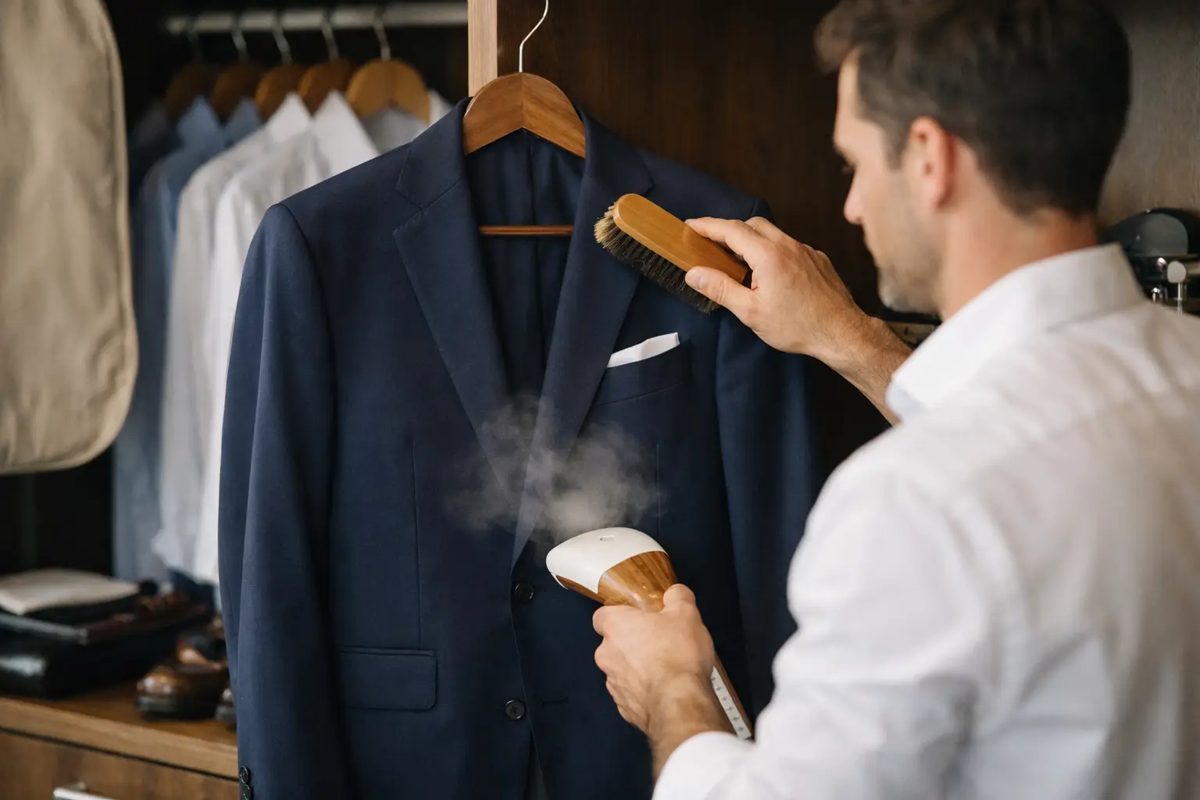
The line at the shoulder, the ease across the chest and the natural fall of the jacket should look, years later, exactly as they did on the first day. Caring for a bespoke suit is not just a matter of removing a stain and hanging it in the wardrobe. It means preserving the character of the chosen cloth, the shape given by handwork and the fit that was created for your silhouette alone.
The wools of cloth houses such as Loro Piana, Dormeuil, Zegna, Scabal or Piacenza 1733 can grow more beautiful with age when they are worn correctly. But fine cloth does not forgive careless habits. Excessive dry cleaning, a thin hanger, overloaded pockets and hurried pressing can shorten the life of even the most perfect cut.
A suit must rest after every wearing
High-quality wool has elastic fibres. That elasticity responds to the small strains that build up in the cloth over a day of sitting and standing, driving a car or holding long meetings. Rather than putting the suit straight back on after wearing, it is better to give it at least 24 hours of rest.
For this reason it makes sense to rotate two or three suits that serve the same function in a working wardrobe. This is not a call to buy more suits; it is a rational approach that protects the shape and colour of the suits you already own. In fine Super 120s, Super 150s and still finer wools in particular, wearing with intervals helps the surface of the cloth stay neater.
On returning home, air the jacket and trousers separately. A few hours in a well-ventilated room is enough — not in front of a window in direct sunlight. If the cloth has absorbed the smell of cigarettes, cooking or a strong fragrance, dry cleaning should not be the first resort. In most cases proper airing reduces the odour naturally.
Caring for a bespoke suit begins with the hanger
A jacket hanger looks like a trivial detail, but it directly determines the shape of the shoulder. A thin metal or narrow plastic hanger can pull the shoulders of the jacket inward and deform the sleevehead. Choose a wooden hanger with wide, softly contoured shoulders, close to the jacket's own shoulder width.
It is not necessary to fasten all the buttons when hanging the jacket. Leaving the front button undone usually creates a more natural tension. When packing the jacket into a travel bag, however, fastening the button can prevent the front from folding in an uncontrolled way.
For trousers, metal clips that grip at the waistband should be used with care. Left for long periods they can leave marks in the cloth. A wide-surfaced hanger that holds the trousers from the fold is more suitable. If the trousers have their own hanging loops, using them protects the construction.
The wardrobe should not be crowded. Jackets pressed against one another get less air, deepen creases and cause the surface of the cloth to rub. For seasonal storage a breathable cotton garment cover is the superior choice. A plastic cover can trap moisture inside and, over time, impede the cloth's natural exchange of air.
A brush is the gentlest cleaning for the surface of the cloth
Brushing the suit after every wearing with a soft, natural-bristle clothes brush is a small but professional habit. The brush lifts dust, the fine particles of city air and the fibres that cling to the surface. Left in place, these particles gradually abrade the cloth, opening the way to a dull appearance and pilling.
Use the brush with light strokes, in the direction of the weave. The sleeves, shoulders, the knees of the trousers and the back skirts of the jacket call for particular attention. Rough strokes, especially on light-coloured flannel or cashmere-blend cloths, can coarsen the surface.
If pilling appears, do not use an ordinary razor or crude devices. They cut the fibres and weaken the surface of the cloth. A professional fabric-care device may be applied only with great caution, but on an expensive suit it is more sensible to entrust this task to an experienced specialist.
Dry cleaning is a matter of need, not frequency
Dry cleaning a suit after every wearing, or even every month, is not the right approach. Chemical cleaning is necessary in certain cases, but with repetition it can reduce the natural oils in the fibres and affect the depth of colour and softness of the cloth. Fine wools, silk blends and jackets with half-canvas or full-canvas construction in particular require a cautious approach.
The decision to clean should be based on visible stains, odour and general soiling. If a suit is worn only a few times a year, professional cleaning at the end of the season may be enough. A business suit worn two or three times a week may, depending on conditions, need attention sooner. There is no fixed figure here — cloth, climate and intensity of use are the deciding criteria.
Tell the cleaner that the suit was made bespoke, what the cloth is composed of and what caused the stain. Trying to remove a stain at home with water, soap or a napkin usually leaves a wider mark. With stains such as oil, wine or ink, rather than rubbing, lift the excess gently with a clean napkin and leave the intervention to a professional service.
The right choice between iron and steam
When a suit creases, the first instinct is to reach for the iron. But direct high heat can create shine on the cloth and leave marks, particularly on dark navy and charcoal wools. The chest, collar and lapels of the jacket are more delicate still, because in these areas not only the cloth but the internal construction is at work.
For light creases, steam is the safer choice. Keep the suit on its hanger, use the steamer at a certain distance without touching the surface of the cloth, and then allow it to cool completely. Steam relaxes the fibres, but it must not wet the cloth.
The classic crease of the trousers, on the other hand, sometimes does call for an iron. In that case use a low or medium temperature, a cotton pressing cloth and brief contact. If the suit is made of silk, cashmere or a specially textured wool, the risk of pressing at home must be weighed. Losing the lustre of the cloth for the sake of a sharp crease is not a good exchange.
Pockets and daily movements change the shape of a suit
A bespoke cut takes account of the body's natural proportions. That is why placing a phone, a set of keys, a power bank and a thick wallet in the pockets of a jacket spoils both the silhouette and the surface of the cloth. Weight in the hip and side pockets in particular prevents the trousers from falling straight.
The inside pocket of the jacket can accommodate business cards, a slim card holder or a light phone. But carrying a heavy object in the same pocket every day creates strain on the lining. It is better to think of a suit pocket not as a substitute for a bag, but as a refined detail intended for essential small items.
Unbuttoning the front of the jacket when sitting down is also important for the shape. It gives comfort and reduces the strain that builds up around the button. On a long car journey it can, in some cases, make more sense to take the jacket off altogether — particularly in a light-coloured, fine cloth and in hot weather.
Seasonal storage and timely alterations
A summer suit should be stored carefully through the winter, and winter flannel through the warm months. Put the suit away clean, completely dry, on a wide hanger and in a breathable cover. If there is damp in the wardrobe, that problem must be solved first. Even the most expensive cloth is not insured against a musty smell and fibre damage in a humid environment.
As body weight, training regime or working habits change, the fit of the suit can change too. If the shoulder line is in place, details such as the waist, the side seam of the trousers or the length of the skirt can be adjusted. Major changes at the shoulders and chest, however, require far more complex intervention. That is why it is wiser to show the suit to the tailor before a problem has grown.
Just like the first look at a suit made at Atelier Baku 1984, every subsequent alteration must respect the silhouette. Good care does more than keep a suit neat. It turns it into a quiet, dependable part of a personal wardrobe that takes shape with you over the years.