

Two-button or three-button jacket: which silhouette?
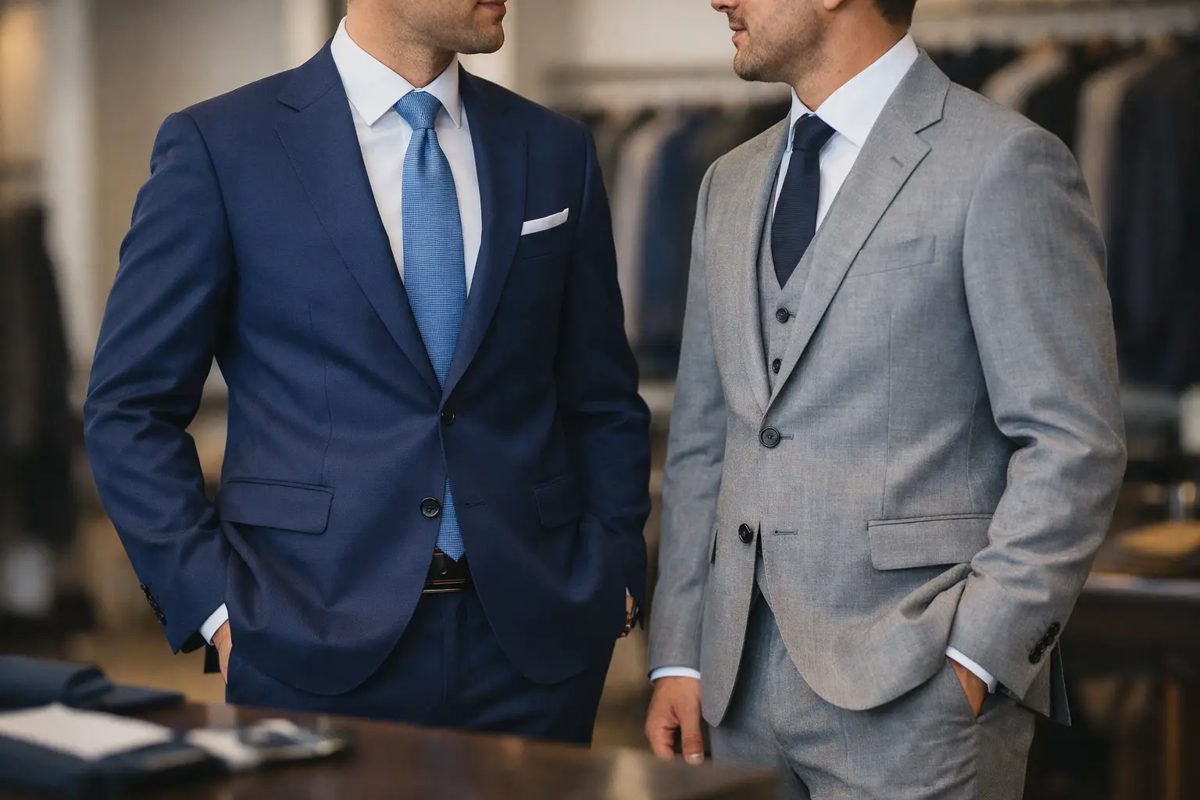
The choice between a two-button and a three-button jacket is not merely a matter of aesthetic taste. The line on which the buttons sit changes the proportion of the chest, the appearance of the waist, the visual length of the neck and the overall character of the jacket. In ready-to-wear this difference can sometimes seem secondary. In a bespoke cut, the position of the buttons is considered as carefully as the anatomy of the body, the posture and the setting in which the jacket will be worn.
In classic men's tailoring the two-button model is regarded as the most universal choice. The three-button jacket is the more traditional, more vertical alternative, and on certain body types it looks particularly expressive. The right decision has less to do with the rules of etiquette than with a man's own silhouette and way of life.
Why is the two-button jacket the classic choice?
The principal advantage of a two-button jacket is its clean, open chest line. When the top button is fastened, the V-shaped opening presents the tie, the shirt collar and the chest in balance. The depth of that opening works together with the width of the lapel and the buttoning point. The result is a silhouette that adapts easily to business meetings, formal lunches and an everyday wardrobe of a high standard.
On men of medium or shorter height this model can visually lengthen the body. As long as the buttoning point is not too low, the waistline stays clear and the legs appear longer. For tall men, too, two buttons are a safe choice, but here the length of the jacket and the exact height of the button become more important. A button placed too low can make the jacket look loose and out of proportion.
With a two-button model the basic rule is simple: the top button is fastened, the bottom button is left undone. When sitting down, unbuttoning the jacket is sensible both for comfort and for preserving the shape of the construction. This is not a formal gesture; it is tailoring logic that prevents the cloth from straining and the front from creasing needlessly.
The three-button jacket and the effect of the vertical line
A three-button jacket creates a higher buttoning point and a front that closes higher on the chest. This construction makes the chest appear more covered and gives the torso a vertical rhythm. On slim, long frames in particular, or on men with a long neck and a narrow chest line, the effect can look very refined.
In the classic three-button model the middle button is fastened, the bottom button is left undone, and the top button is either left open or fastened depending on the cut of the jacket. But this rule should not be applied mechanically. The break point of the lapel, the fullness of the chest and the front balance of the jacket determine the decision. In a well-made jacket, fastening a button should not squeeze the body, part the front skirts or pull the lapel.
A subtler variant of the three-button model is the 3-roll-2 construction. Here the jacket has three buttons, but the lapel rolls naturally over the top one and the jacket reads as a two-button. This is a solution beloved in both the Neapolitan and the English tailoring traditions, creating a soft transition. It brings together the vertical structure of three buttons with the open, easy expression of two.
Which model suits which body type?
The number of buttons does not decide on its own. The shoulder structure of the jacket, the height of the armhole, the suppression at the waist, the length of the skirt and the position of the rear vents all work together. Nonetheless, certain tendencies give useful direction for the choice.
On shorter men, or those with a relatively broad torso, a two-button jacket usually gives a more comfortable result. The V-line opening downward lightens the chest and makes the body look longer. Here it would be a mistake to choose a lapel that is too narrow: a reasonably full lapel creates the necessary balance between chest and shoulder.
Tall, slim men can benefit from the vertical structure offered by a three-button or 3-roll-2 model. But buttons placed too high can make the torso look excessively long. The tailor's aim is less to select the model than to align the buttoning point with that man's natural waistline.
On athletic, broad-shouldered men either choice can work. In that case the essential point is that the front sits calmly over the chest. If an X-shaped strain appears across the skirts when the button is fastened, the problem lies not in the number of buttons but in the structural relationship between the chest and waist measurements.
The choice of cloth changes how the buttons look
The shape of a buttoned jacket is read together with its cloth. The firmly twisted wools of cloth houses such as Dormeuil and Scabal, for example, can produce a clear, precise silhouette in a two-button jacket. This choice makes sense for men who travel often, move a great deal during the day and want the jacket to hold its shape.
The soft, fine wools and cashmere blends in the collections of Loro Piana, Piacenza 1733 or Zegna show a different character in a three-button or 3-roll-2 construction. The natural roll of the lapel, the quieter appearance of the buttons and the soft movement of the front can be more expressive in these cloths. In return, a very fine cloth demands careful maintenance and more precise construction.
When an open-weave wool, a wool-silk-linen blend or a light tropical wool is chosen for a summer wardrobe, the material of the buttons matters too. A horn button looks deep and natural, while mother-of-pearl gives a brighter, more seasonal character. Small as a button is, its tonal relationship with the cloth defines the level of the jacket.
The working wardrobe, occasions and everyday wear
If a first bespoke jacket is being chosen for work, a two-button model in dark navy or charcoal grey is the most rational starting point. It works easily with white, blue and fine-striped shirts and accompanies the wearer from a meeting with a tie to dinner without a change of context. That versatility makes it a considered choice rather than a compromise.
A three-button jacket, on the other hand, can create a more personal signature for a man whose wardrobe already holds well-established two-button suits. Cloths such as dark chocolate brown, deep olive, grey flannel or a fine pinstripe reinforce the classic spirit of this construction. Its orderly appearance is particularly well placed at meetings of a diplomatic character and in more traditional formal settings.
For black-tie occasions the discussion changes somewhat. A tuxedo (dinner jacket) is usually made in a one-button construction, sometimes with two. The aim here is not to repeat the proportions of a day suit, but to create, with a shawl collar or peak lapels, a cleaner front line suited to the evening hours.
The hidden sizing problem in a ready-made jacket
When choosing a two- or three-button jacket in ready-to-wear, often only the shoulder and chest sizes are checked. Yet the buttoning point sits in a different place on every man. Details such as the stomach, the structure of the ribcage, the forward or backward slope of the shoulders, or one arm hanging lower than the other change the front balance of the jacket.
This is why bespoke tailoring does not treat the number of buttons simply as a style decision. At the first meeting the proportions of the body, the shirts and shoes with which the jacket will be worn, the client's working routine and personal habits are all taken into account. At subsequent fittings the roll of the lapel, the fit at the waist and the natural position of the buttons are refined. A good jacket must look as well cared for when standing as it is untroubling when its owner sits and moves.
For Atelier Baku 1984 the value of this process lies precisely in the details: the chosen European cloth, the construction and the man's posture are parts of a single decision. Two buttons may seem more universal, three more selective. But the most correct jacket, before any count of its buttons, is the one that sits calmly, naturally and convincingly on its owner.
When choosing your next jacket, do not look only at the fastened front in the mirror. Sit down, move, raise your arms and observe how the lapel lies over the chest. True quality shows itself not at first glance, but when the jacket moves with you through the whole day.