

How to choose a suit for a business meeting
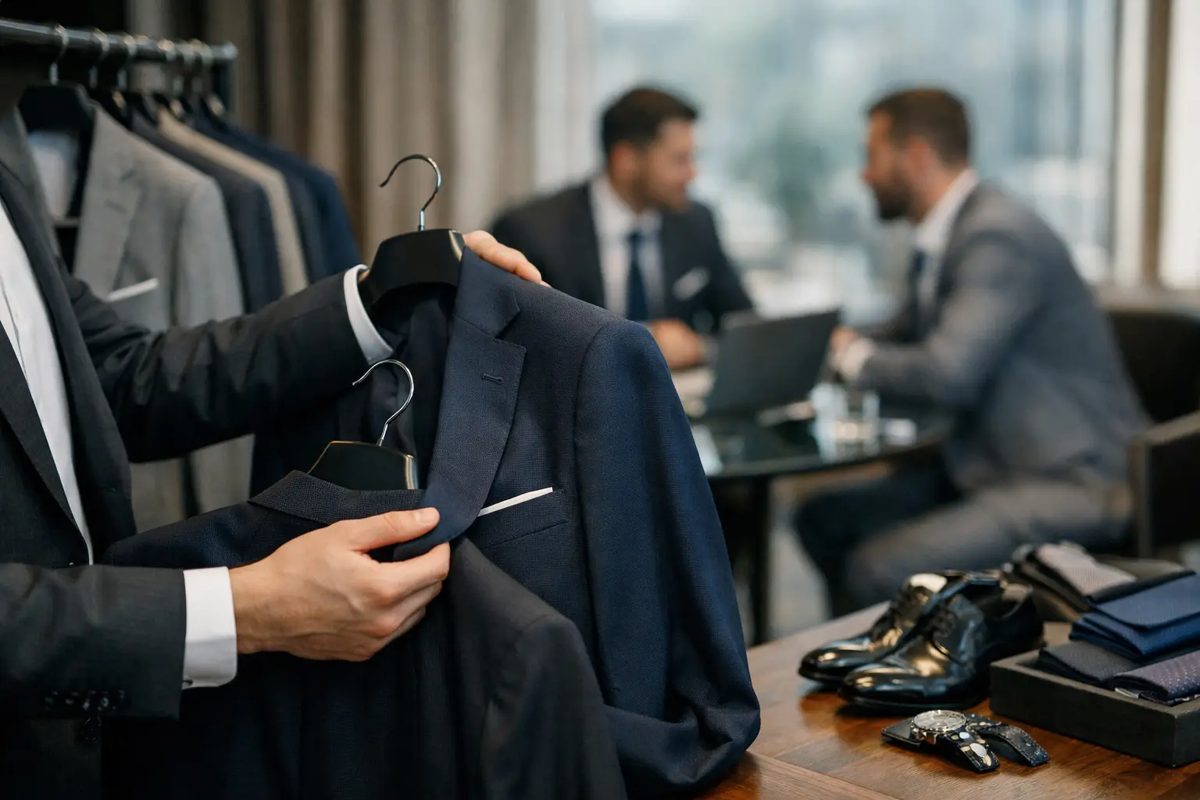
Before you enter the meeting room, your suit is already speaking on your behalf. A suit for a business meeting is not merely a means of looking neat — it is a silent signal of your position as a decision-maker, your attitude to detail and the respect you extend to the other party. That is why the right choice begins not with the season's fashion, but with the nature of the meeting, the build of the body and the quality of the cloth.
For executives, entrepreneurs and professionals who work with international partners in particular, the effect of a suit lasts far longer than the first impression. A well-fitting jacket allows you to move freely throughout the meeting, a well-chosen colour does not distract attention from what you say, and a high-quality cloth preserves the refinement that is felt at close range.
The basic principle of a suit for a business meeting
In business dress the strongest choice is usually not the one that attracts most attention. Dark navy, charcoal grey and mid-grey tones create a dependable foundation for a professional setting. These colours look restrained and appropriate both at daytime meetings and on programmes that continue into a business dinner.
The status of the black suit is beyond dispute, but it is a mistake to regard it as a universal choice for every meeting. Black belongs more to evening events, official ceremonies and special invitation formats. In negotiations held during the day, dark navy or charcoal grey makes the face look softer and the overall appearance more natural.
The cut is as important as the colour. The shoulder line of the jacket should sit precisely without constricting the body, the collar should meet the neck without a gap, and the sleeves should end so that roughly one centimetre of shirt cuff is visible. The most common problem with ready-made suits is that the shoulders and the chest do not suit their owner. That flaw is either impossible to correct later or weakens the construction of the garment.
Choosing cloth: the quality that is felt before it is seen
In a business suit the cloth is not only a visual matter. It determines how you move during the day, how quickly creases appear and how comfortable you will remain in the climate of Baku. The most reliable base is a fine wool cloth that is nonetheless not excessively thin.
Treating a very high Super thread count as an automatic advantage is not an accurate approach. A very fine wool can offer unusual softness and an elegant appearance, but for a suit worn every day it is the more delicate choice. For men who travel often and spend time in the car or in long meetings, a mid-weight wool with natural elasticity gives the more practical result.
In the collections of cloth houses such as Dormeuil, Scabal, Reda, Drago, Piacenza 1733, Zegna and Loro Piana, the difference is not confined to the name. The choice of fibre, the density of the weave, the drape of the cloth and the depth of colour affect how the suit will age over the years. A good cloth shows itself on the first wearing, but its true value emerges after repeated use.
In the summer months a light wool, a wool-silk blend or open-weave cloths may be appropriate. That said, an excessively open weave can weaken the formal appearance and crease quickly. In winter, flannel and denser wool surfaces create a deep, serious look, but their level of formality must be matched to the character of the meeting.
The role of pattern at a meeting
At first meetings or in high-level negotiations, a plain cloth is the safest choice. Its calm surface directs attention not to the suit but to your position. A very fine pinstripe or a micro-pattern barely visible to the eye can be a good addition to an experienced wardrobe, but it does not take the place of the principal business suit.
Wide stripes, sharply contrasting checks and lustrous surfaces express personal style forcefully. In some creative fields that can be an advantage. But in finance, law, diplomacy and corporate negotiations, a more restrained cloth keeps the other party's attention free of unnecessary visual messages.
Why do construction and fit change the result?
The impression given by two suits made from the same cloth can be entirely different depending on the construction. The canvas structure used in the chest helps the jacket adapt to the body, lets the lapel lie naturally over the chest and keeps the shape over the long term. A fused construction may look neat at the outset, but over time it can produce stiffness, bubbling and an unnatural line.
In bespoke tailoring, measurement is not simply a matter of chest and waist figures. The slope of the shoulders, the shape of the back, the carriage of the neck, the natural position of the arms and everyday habits of movement are all taken into account. It is precisely these differences that separate a suit that appears on a man from a suit that appears to belong to him.
The choice between a one-button and a two-button jacket also depends on personal proportion. The classic two-button jacket is a stable and versatile choice for most business wardrobes. On a taller, slimmer build, a three-button form or a longer skirt line may have its place. The aim here is not to alter the silhouette but to preserve its natural balance.
During a personal appointment at Atelier Baku 1984, these details are approached as a whole: the choice of cloth, the construction, the shape of the lapel and the proportions of the silhouette are determined to suit the client's professional way of life. This approach ensures that the suit gains value not for a single meeting, but as a long-term wardrobe investment.
The right balance with shirt, tie and shoes
The business language of a suit is completed by the shirt and tie. A white poplin shirt is the most formal and clearest choice. Light blue is an equally professional, slightly softer alternative that is comfortable for daily wear. The shirt collar should suit the face, the neck and the tie knot; a collar that is too open can weaken the formal look.
In a tie, dark navy, deep burgundy, forest green or quiet brown tones keep the colour of the suit steady. A seven-fold tie made of Como silk gives a softer knot and a deeper texture, but its pattern must not compete with the suit. A finely textured tie with a plain suit, and a quieter tie with a micro-patterned suit, create a good balance.
In shoes, a black oxford is a flawless choice with a charcoal grey or black suit. A dark brown oxford or derby looks both classic and livelier with a dark navy suit. More important than the colour of the shoe is its condition: a clean toe, a correct shape and quality leather are an inseparable part of a business appearance.
Choose according to the type of meeting
Not every business meeting demands the same dress code. First negotiations with an investor, an official reception at a state institution and a meeting with an international delegation call for a more serious colour palette, simple accessories and an impeccable shirt. At a lunch meeting with a long-standing partner, a dark navy suit, a light blue shirt and a textured tie can look sufficiently formal and at the same time more relaxed.
If the dress code of the meeting is unknown, dressing one step neater is usually the better decision. That does not mean flashy cufflinks, very sharp patterns or ostentatious logos. Discreet quality creates the more lasting impression.
Prepare your suit the day before the meeting: air the jacket, clean the shoes, check the collar and cuffs of the shirt. The best business appearance is not created at the last moment; it is the result of calm preparation and choices that fit you precisely.