

The differences between Italian and English suit cuts
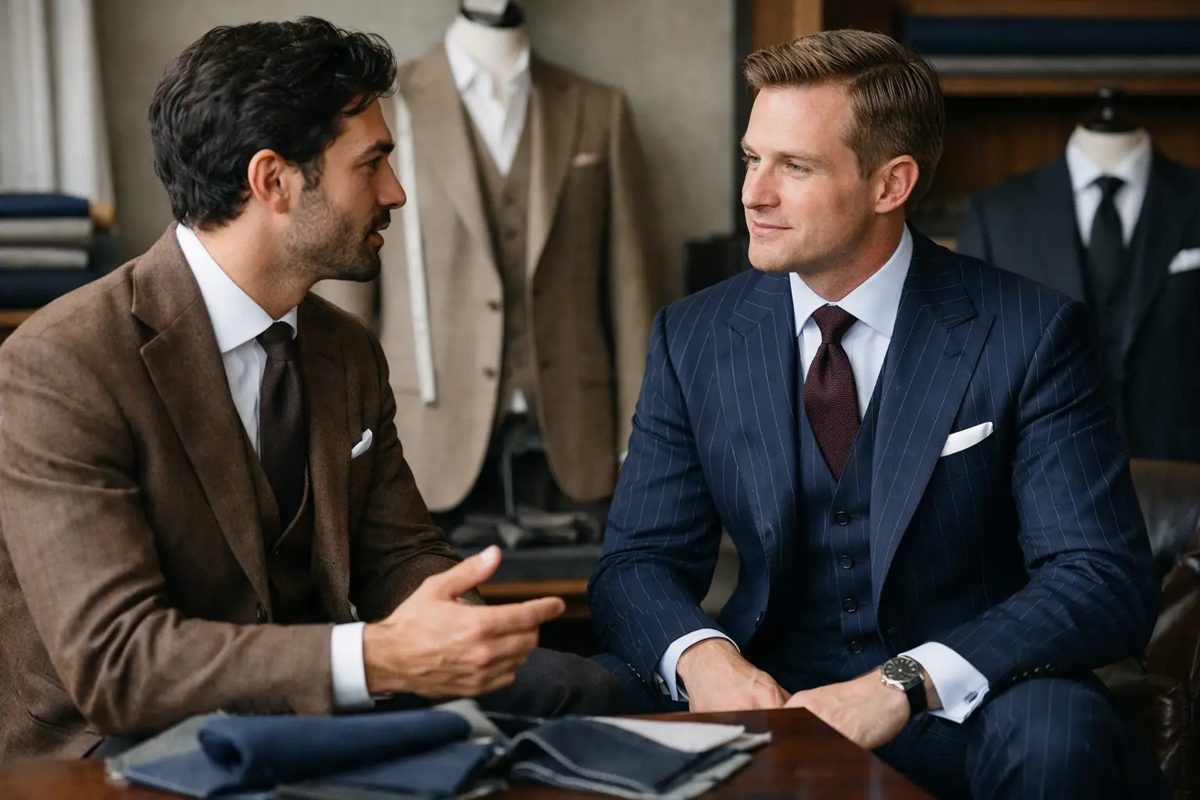
The effect a suit has on you begins first of all not with its colour or the name of its cloth, but with its cut. Italian and English suit cuts are two distinct schools of tailoring: one brings movement, lightness and the line of the body to the fore, while the other creates structure, discipline and a more expressive shoulder line. Both are the language of tailoring at the highest level. The question is not which is better, but which answers more precisely to your build, your daily rhythm and the position in which you wish to be seen.
In a bespoke or made-to-measure commission this choice is not as simple as picking a ready model from a catalogue. The angle of the shoulder, the construction of the chest, the set of the sleeve, the length of the skirt and even the position of the buttons are all related to one another. A master tailor does not repeat a style blindly; he rebuilds its logic for the client's silhouette.
The differing outlooks of the two schools
English tailoring grew out of London's more formal, orderly and functional tradition of dress. In this school the suit gives shape to the body: the shoulder is defined, the chest carefully built, the waist drawn in with control. The result is a silhouette that looks serious, assured and especially effective in a business setting.
Italian tailoring, and the Neapolitan tradition in particular, is known for its softer construction. Here the suit accompanies the body's natural movement rather than governing it. Less lining, a lighter chest construction, a natural shoulder and a soft drape are the hallmarks of this style. The appearance is relaxed, but it must never be careless.
This difference is not purely aesthetic. How a suit chosen for a business meeting in Baku, a diplomatic reception, a wedding or an international trip carries itself, how comfortable it stays through the day and what impression it leaves on the other party all depend on the cut.
The English suit cut: structure and standing
The English suit usually has a more expressive shoulder line. Light or moderate padding at the shoulders, a shaping construction in the chest, a clear waistline and a relatively straight skirt line give the suit a firm frame. On a man with narrow shoulders, a tall man or a slimmer build in particular, this can create a balanced appearance.
In a classic two-button jacket, the buttoning point and the width of the lapel play a special role in this school. A more structured chest helps the jacket keep its shape even when worn open. With heavyweight flannel, twill, herringbone or densely woven wools, this construction shows its strength most clearly.
But structure must not mean stiffness. When the shoulder is built too wide, the chest padded needlessly and the waist forced in, the suit governs its owner rather than the other way round. That is exactly where the value of a bespoke cut lies: keeping the discipline of the English style while adapting it to the body's natural proportions.
The English cut is a very natural choice for board meetings, formal presentations, and the legal, financial and diplomatic worlds. Made up in dark navy or charcoal grey, in fine wools from cloth houses such as Dormeuil, Scabal or Zegna, this suit states its position without raising its voice.
The Italian suit cut: lightness and a natural line
The principal appeal of the Italian school is its air of ease. The shoulder is often unpadded or only minimally padded, the sleevehead sits softly and the chest construction is kept lighter. The jacket does not constrain the body; it moves with it.
In this style a high armhole and a livelier waistline make movement of the arms easier. Some Neapolitan-influenced models show a soft, shirt-sleeve shoulder seam or a more open chest line. These are not decorative gestures but considered tailoring decisions that let the jacket fall more naturally.
The Italian cut can gain the advantage in mild and hot weather, in a working schedule with much travel, at daytime events and at social meetings of a more personal character. The fine wool, wool-silk, wool-cashmere and open-weave cloth collections of houses such as Loro Piana and Piacenza 1733 work especially harmoniously with a soft construction.
That said, a light jacket does not give the same result for everyone. For a client with sloping shoulders, a very flat chest or uneven body proportions, a fully soft construction may not create the necessary visual balance. In such cases a hybrid cut — close to Italian ease, but with more control at the shoulder and chest — is the more correct solution.
How to choose between Italian and English suit cuts?
It is right to begin the choice with body type, but one cannot stop there. Professional position, the general character of the wardrobe, the climate you live in, and the time you spend in the car or the office during the day are equally important.
A man who wants a more formal, authoritative and contoured appearance may lean towards the English cut. If the aim is a softer, more elegant and relaxed silhouette, the Italian cut will feel more natural. But these choices are not hard borders. A dark navy jacket with a light construction but an expressive shoulder, for example, can be both formal and comfortable through a long day of diplomatic travel.
The most successful commissions usually do not stay bound to a single school. The tailor may draw on English precision for the client's shoulder structure and Italian lightness for ease at the chest. This is not a compromise but a correct interpretation based on measurement.
The cloth completes the cut
The same cut looks entirely different in a different cloth. A dense, shape-holding wool of 320–360 grams shows the English construction more clearly. Lighter, open-weave cloths with a supple drape strengthen the natural fluidity of the Italian style.
Choosing the weight of the cloth by season alone is not enough. A very light cloth is comfortable in hot weather but may tend to crease quickly and hold its shape less well. A heavier wool gives a magnificent fall, but on a long summer day it creates unnecessary heat. The right choice is determined by frequency of wear, travel routine and the degree of formality expected of the suit.
Details to watch in the fit
However well the cut is chosen, a suit is not finished until the fit has been checked. The shoulder seam should stop at the point where the shoulder naturally ends. The collar should sit against the shirt collar without a gap, the chest of the jacket should not pull when buttoned, and no horizontal creases should form across the back.
The fit of the trousers is as important as that of the jacket. In the English style a cleaner, straighter line may be chosen; in the Italian approach a relatively higher waist and an easy thigh. In either case the essential criteria are that the trousers do not bind when seated and do not gather excess cloth when standing.
The purpose of a personal appointment at Atelier Baku 1984 is precisely to keep these subtleties under control from the first measurement to the final fitting. The chosen cloth, the construction of the jacket and the client's scenario of use are considered as parts of a single decision.
The surest sign of a good suit is that its style needs no explanation. Bring an example of the shirt and shoes you will wear to the first appointment, speak openly with the tailor about your daily habits of movement, and in the mirror assess not only the front view but the fit when seated, the walk and the side profile. The right cut will make that quiet confidence felt in every detail.