

Fit and Cloth Selection for a Men's Suit
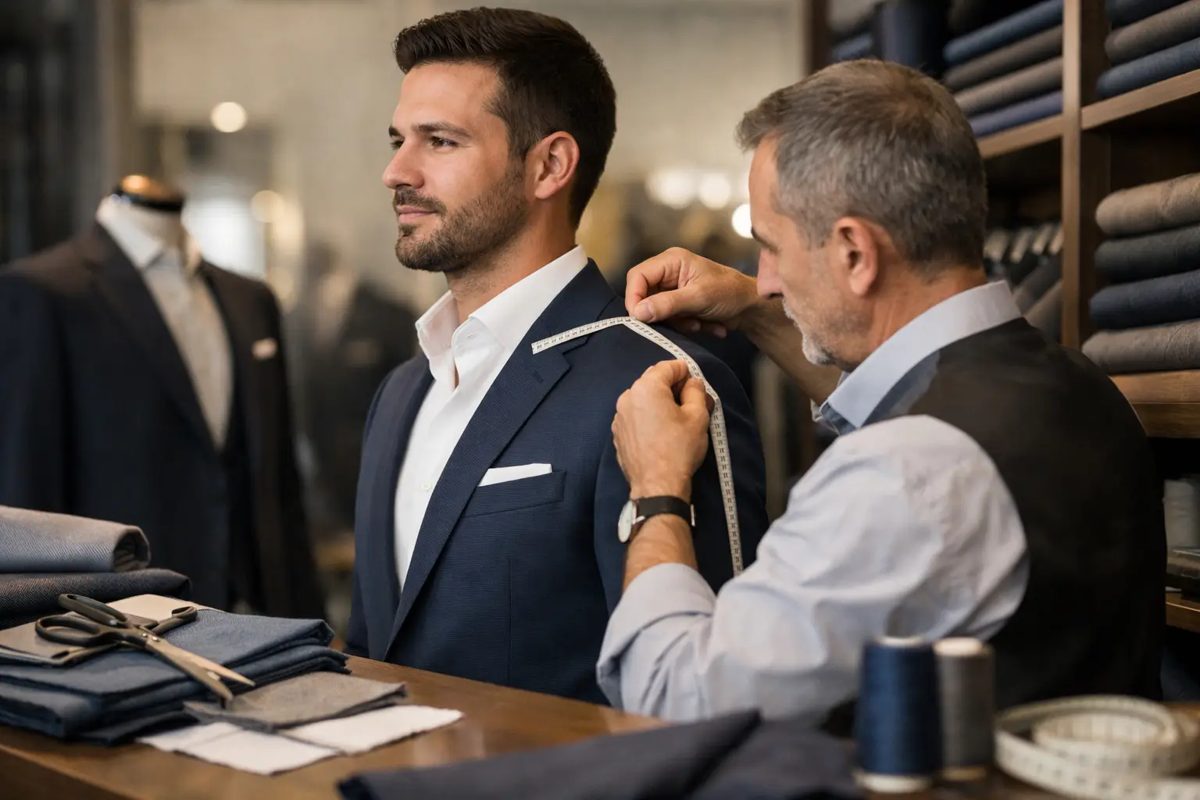
A man's suit speaks about him before he enters the room. The correctness of the shoulder line, the way the collar sits at the neck, the depth the cloth reveals in the light and the way the trousers break over the shoe are details that seem incidental yet make a serious difference. A good men's suit is not merely a garment bought for a special occasion; it is a long-term choice that carries authority, comfort and personal taste all at once.
A ready-made suit can sometimes suffice. But for a man with a busy schedule of business meetings, who pays attention to his appearance at official receptions and ceremonies, the fundamental question is not simply colour or brand: how precisely does the suit answer to his body, his way of life and the purpose for which it is worn? The answer to that question lies in the fit, the character of the cloth and the construction.
A men's suit must first be chosen for its purpose
One suit is not equally the right choice for every situation. Your daily working routine, the level of formality at the office, whether or not you travel frequently and the character of the events you attend all change the choice of cloth and cut. A dark navy suit is very often the most flexible starting point: it adapts to a business meeting, a lunch, an evening reception and, with the right shirt and tie, an official ceremony.
Charcoal grey gives a calmer, more institutional impression. In law, finance, diplomacy and high-level corporate settings its restrained tone is particularly well placed. Light grey, beige or blue shades should be considered for meetings held in daylight, the spring and summer season and less formal social programmes.
Trying to adapt a business suit for a wedding or a black-tie evening is not the right approach. In that case the proportions of the tuxedo (dinner jacket), the type of lapel, the sheen of the cloth and the discipline of the accessories carry their own significance. The same principle applies to morning ceremonies and events held outdoors. When the purpose is clear, the choice becomes both more elegant and more efficient.
Fit matters more than the number
The size on the label does not fully describe the real proportions of the body. Two men with the same chest measurement can have different shoulder widths, waistlines, back structures and arm lengths. That is why the quality of a suit should be judged first of all in the mirror, in motion.
The shoulders should follow the natural shoulder line, neither extending beyond it nor pulling inward. This is the part of a suit that is hardest to alter. The collar should sit close to the shirt collar, without a gap or a roll at the back of the neck. If an X-shaped strain appears across the chest when the button is fastened, the jacket is too tight; if the cloth ripples with excess, the cut is not precise enough.
The length of the jacket, too, should be based on the proportions of the body rather than on passing trends. An excessively short jacket may try to lengthen the legs artificially, but it weakens the mature, classic appearance. An excessively long model weighs the silhouette down. The correct length does not divide the body into parts; it shows it as a natural whole.
In the trousers the waist should be comfortable but stable. A thigh that is too tight creates strain when sitting and standing, while a cut that is too wide loses the line of the suit. A single light break over the shoe is a dependable choice for most men. That said, on a taller, slimmer man a cleaner length with no break can also look elegant. Here a sense of proportion decides, rather than a single rule.
The cloth defines the character of the suit
Choosing suit cloth by colour and touch alone is not enough. The origin of the fibre, the twist of the yarn, the density of the weave, the weight and the surface determine how the cloth will fall, how it will breathe and how it will behave over time. High-quality wool remains the principal material of the everyday suit, because it both regulates temperature and, with the right construction, holds its shape for a long time.
Super numbers are sometimes presented as the sole measure of quality. In reality, Super 120s, 150s or a higher figure gives information about the fineness of the fibre but does not on its own determine the practicality of the cloth. A very fine cloth can offer exceptional softness in the hand, but it may prove more delicate every day, through long working hours and a dense travel schedule. For daily wear, a mid-weight wool with natural elasticity and relative resistance to creasing is very often the more considered investment.
The difference between cloth houses such as Loro Piana, Dormeuil, Piacenza 1733, Drago, Scabal, Reda and Zegna lies not only in the name. In their collections the choice of fibre, the quality of the yarn, the depth of colour and the order of the weave rest on many years of technical experience. But even the most prestigious cloth does not show its full potential without a correct cut and neat tailoring.
In the climate of Baku the question of season deserves particular attention. In the hot months, open-weave wool, wool-silk blends and lightweight materials can be the more comfortable choice. For the cold period, flannel, more densely woven wool and cashmere blends create a calm, deep appearance. The hand of cashmere is appealing, but for hard daily wear it may demand more care than pure wool.
Construction is the quality that cannot be seen
The internal structure of a suit matters as much as its outward appearance. Jackets of fused construction may look neat at first glance, but over time, under the influence of heat, movement and cleaning, they carry the risk of rippling at the front. Half-canvassed and fully canvassed constructions, by contrast, give the chest of the jacket a more natural shape, better breathability and the ability to adapt to the body over time.
A fully canvassed jacket is not an obligatory choice for every client and every scenario of use. Budget, frequency of wear and the expected level of comfort all play a part here. But for a man who wants to wear a jacket for many years and to see it sit better on his body with time, this construction is a serious advantage. This layer, unfelt inside the suit, creates a difference that is immediately visible at the shoulder and chest.
The hand-finishing of the lapel, the cleanness of the buttonholes, a lining that allows movement and the balance of the pockets demand the same attention. In tailoring, excellence in details is felt precisely in these silent moments. There is a difference between a detail added for show and a functional detail that completes the proportion.
What does a bespoke cut change?
Bespoke tailoring is not simply the taking of measurements. It is a process that takes into account a man's posture, the slope of his shoulders, the comfort he prefers, his daily movements and his aesthetic choices. Some men choose the Italian silhouette, with its more natural shoulder and light construction; others prefer the classic English influence, with a more expressive chest line and a defined shoulder structure. Either approach can be right, provided it suits the character of the owner and the setting in which it is worn.
A made-to-measure service works by adapting an existing pattern to personal measurements, and in the right atelier it can give a very precise result. Bespoke, on the other hand, means building the pattern from scratch for the client. For a man whose body proportions differ more markedly, who carries particular expectations of comfort or who regards the suit as a lasting element of his wardrobe, the advantage of the bespoke process is more clearly visible.
At Atelier Baku 1984, the appointment-based selection of measurements, cloth and details makes it possible to take this difference into account. The number of buttons, the shape of the lapel, the type of pocket, the lining, the monogram and the construction of the trousers are not separate decisions. Together they determine how the suit presents its owner.
Keeping a suit for the long term
An excellent suit cannot keep its shape without proper care. Giving it rest rather than wearing it two or three days in a row, using a wide and sturdy hanger, and brushing away dust with a soft brush after each wearing all extend the life of the cloth. Dry cleaning should be chosen only when genuinely needed; excessive cleaning tires the fibres.
When travelling, the method of folding the suit or a good-quality garment bag also matters. Small creases usually fall out with steam and a night of proper hanging. Pressing the cloth directly at high temperature, on the other hand, can leave shine and marks. This simple discipline protects the value of the chosen material and the tailor's work.
A good suit is made not to attract attention on its first wearing, but to make its owner look more assured every time. When faced with the choice, select not the most striking detail but the cloth that sits correctly on your body, answers to the rhythm of your life and keeps its meaning as the years go by.