

A guide to suit construction choices
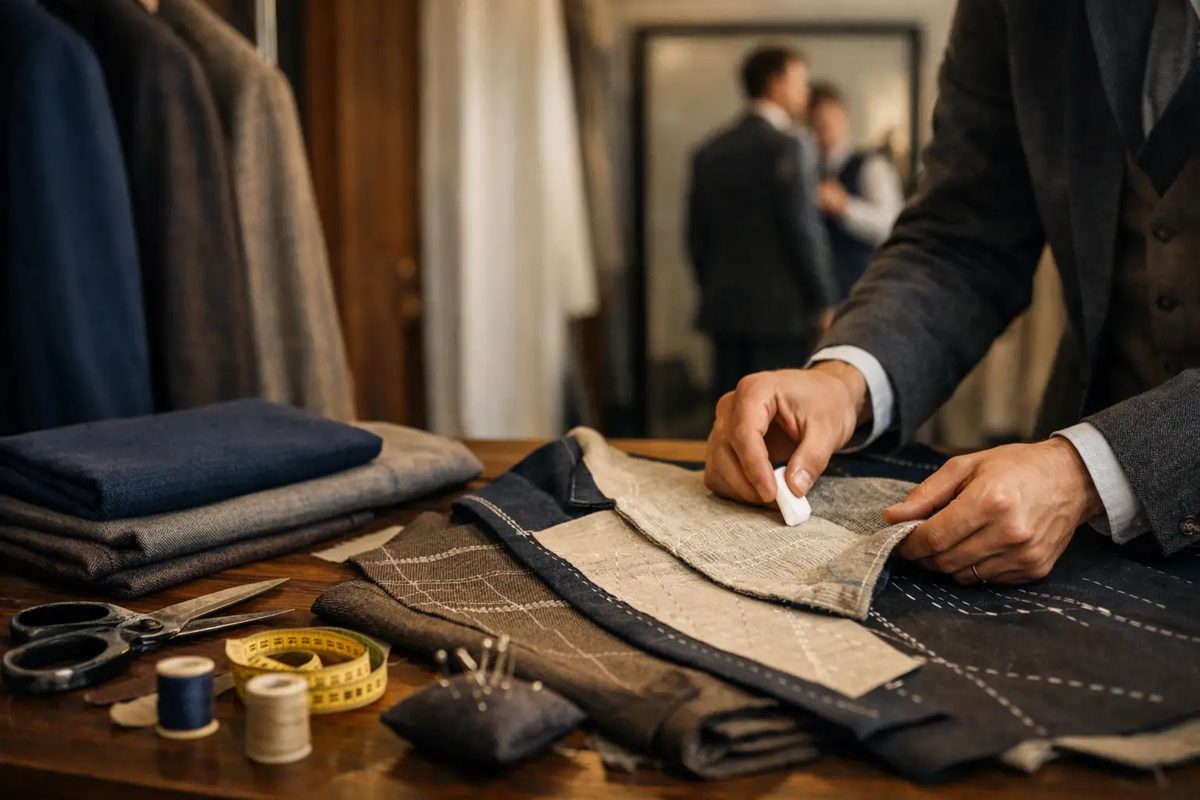
In the shop window, a suit first catches the eye with its cloth, its colour and its buttons. But the unseen part that sets it apart for years is the construction. This guide to suit construction choices clarifies the essential differences that determine how the jacket sits at the chest, how the lapel returns to the body and how well the garment keeps its shape over time.
When choosing a suit of high quality, construction is not merely a technical detail. It is a decision tied to your daily working rhythm, the Baku climate, your build and the length of service you expect from the suit. The same Zegna or Dormeuil cloth can take on an entirely different character with a different construction.
Construction is the inner architecture of the jacket
Between the outer cloth of the jacket and its lining lie the layers that shape the chest, the lapel and the front. The material of these layers and the way they are joined to the cloth define the construction. The principal choices are fused, half-canvassed and fully canvassed construction.
Seeing this difference at a glance is not always easy. But the line the jacket makes across the chest when buttoned, the soft roll of the lapel and the rippling that appears at the front after long use show the quality of the construction plainly. In a suit tailored to individual measurements especially, the inner structure should support the body's natural posture, not stiffen and conceal it.
Fused construction: practical, but limited
In fused construction, an adhesive-based interlining is pressed onto the inner surface of the front panel. This method speeds up production and gives the jacket a neat and orderly appearance at the outset. It can be a sensible choice for suits worn more rarely, for a single season or on a more controlled budget.
However, fused construction can impose limits in hot weather and over long use. Through heat, humidity and repeated cleaning, the outer cloth and the inner layer can begin to behave differently, and slight bubbling may appear at the front. This does not happen with every suit, but in fine wool, cashmere blends or light-coloured cloths the risk is more noticeable.
A fused jacket does not adapt to the body over time. Whatever shape it has on the first day, it largely keeps that shape. For someone who wants a stiff, flat silhouette this may be acceptable, but for a man seeking a natural chest shape, a lively lapel and easy movement there are better alternatives.
Half-canvassed: the measured choice for everyday luxury
In half-canvassed construction, a layer of natural canvas is used in the chest and lapel area, while the lower part of the jacket is finished with a lighter interlining. For many professional wardrobes this approach strikes the most correct balance: the regions of the jacket that are most visible and most in need of shape are built naturally, and unnecessary weight is avoided.
The way the lapel breaks from the chest and rises to the collar looks softer in a half-canvassed jacket. The chest takes on volume without constricting the body, and the cloth is less inclined to pull when sitting. For men who wear the same suit to business meetings, on journeys, through the daily rhythm of management and at an evening reception, this construction is especially sensible.
The half-canvassed solution is not as labour-intensive as full canvas, and so it offers a sound balance between price and performance. But here too, quality depends on the tailor's work. If the position of the canvas layer in the chest, the shoulder construction and the balance of the front are not built correctly, the term on the label alone will not deliver the expected result.
A guide to suit construction choices: full canvas
In fully canvassed construction, a layer of natural canvas is used along the entire front of the jacket. This interlining, usually composed of horsehair, wool and cotton, gives both firmness and elasticity. It is a living layer working between the body and the outer cloth: it creates shape but does not hinder movement.
The advantage of a fully canvassed jacket does not shout at first sight. Its value emerges with wear. The jacket falls more naturally from the shoulder to the chest, the front does not look strained when buttoned and the lapel keeps its volume more beautifully. Worked in high-twist wool, flannel, a cashmere blend or a textured Scabal cloth, this construction does not mask the character of the material; on the contrary, it reveals it.
This choice is intended for the man who wants to build a long-term wardrobe, who wears his suit regularly and who values the quiet quality of details. In a suit made for diplomatic meetings, important presentations, wedding ceremonies and the moments when personal standing plays a special role, fully canvassed construction is a sound investment.
The trade-off is clear: full canvas demands more handwork, more precise intermediate stages and a higher budget. Nor is it necessarily the right choice for everyone. For a black ceremonial suit worn a few times a year, or a jacket used only briefly in the hottest months, half-canvassed construction may be the more rational option.
The shape of the shoulder and chest changes the decision
Construction does not end with the choice of canvas. The structure of the shoulder defines the overall message of the jacket. A soft, light shoulder creates a more natural silhouette, closer to the Italian style. A more structured shoulder strengthens the frame and can look more decisive, especially on a man with narrow shoulders or a less upright posture.
The shape of the chest is equally important. A deep, strong chest construction makes an impression close to the classic English tailoring tradition. A lighter chest may win out for the warm season, for travel and for comfortable everyday use. There is no universal right answer here: physique, the style of presentation a position demands and personal taste must be considered together.
A very stiff shoulder can make a fine cloth look heavy. An excessively soft construction, on the other hand, may not create the presence desired in a formal setting. Professional tailoring is the art of finding, between these two extremes, the line that suits the client's natural posture.
Cloth changes the behaviour of the construction
Choosing the cloth separately from the construction is not the right approach. Loro Piana's soft, luxuriously woven wool-cashmere blend can move very elegantly in a light or half-canvassed structure. The more formal, high-twist wools of Drago or Reda, on the other hand, give a clean, orderly line with a structured chest.
For Baku, the season must also be taken into account. In the summer months, combining open-weave wool, wool-silk or wool-linen blends with a heavy inner layer can reduce comfort. This does not mean giving up fully canvassed construction. It simply means that the weight of the canvas, the amount of lining and the structure of the shoulder must be chosen more thoughtfully.
In the winter season, in flannel, denser wool and cloths containing cashmere, the construction keeps the silhouette steady. Although a heavy cloth has shape of its own, a correctly built chest ensures that the jacket looks measured on the body rather than coarse.
What to look for at the fitting
The quality of construction can be judged not only in technical terms but in front of the mirror. When the jacket is buttoned, there should be no horizontal lines of tension across the chest. The lapel should not cling to the body but keep its natural roll. If the shoulders do not rise excessively when the arms are stretched forward, the construction is cooperating with your movement.
Sit down and stand up, put your phone in your pocket, stretch your arms across the table. A suit is not made only for a photograph taken standing. For an executive or an entrepreneur in particular, most of the day passes in a meeting room, in a car or on a journey. The right construction should quietly recover its shape after these movements.
It is precisely here that the value of a personal consultation at Atelier Baku 1984 becomes visible: cloth, construction, shoulder line and the scenario of use are assessed not in isolation but as parts of the same suit.
The best jacket is not the one with the heaviest or most expensive construction. It is the jacket that strengthens your standing when you walk into a room, does not disturb your comfort through the day and, as the years pass, shows your taste with ever greater confidence.