

How suit measurements are taken: a precise explanation
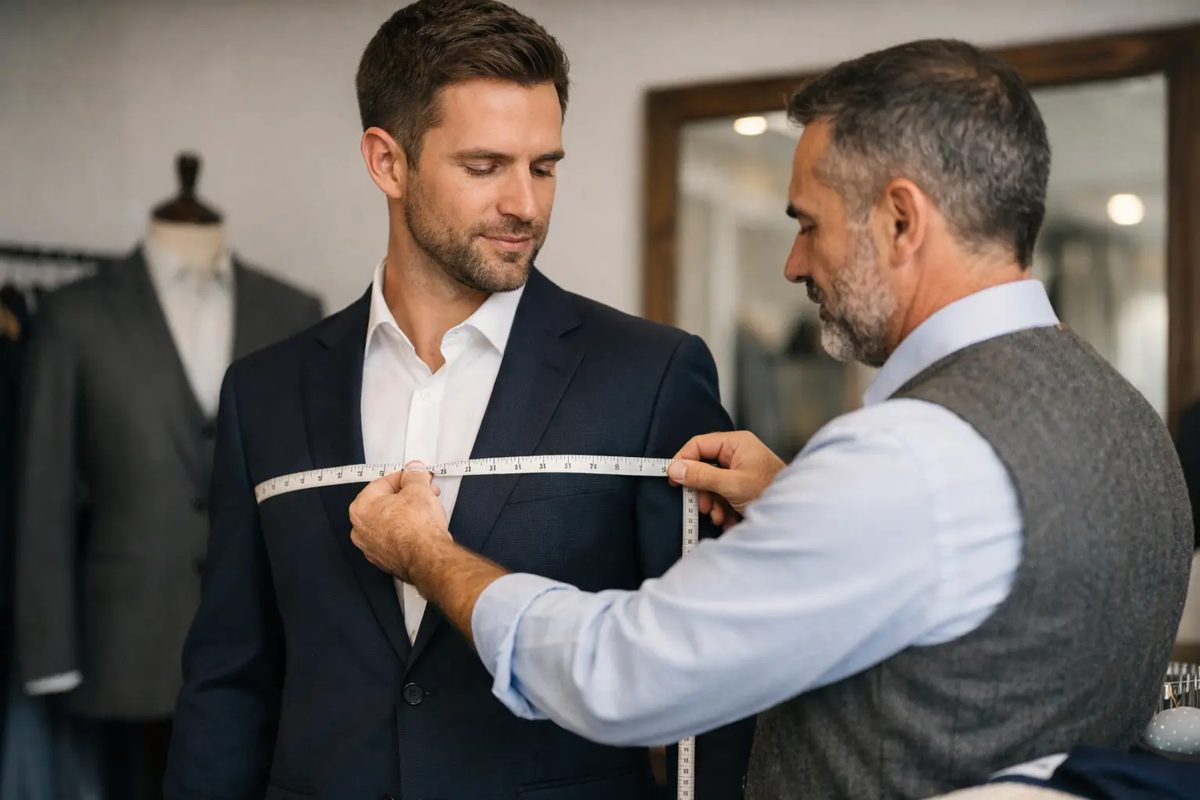
The answer to the question of how suit measurements are taken is not simply a matter of wrapping a tape measure around the body. Precise measurement means reading a man's natural posture, his shoulder line, his habits of movement and the circumstances in which he will wear the suit. Two men with the same chest measurement may have different body proportions, different arm positions and a different waistline. That is why a good suit begins with numbers, but is not completed by numbers alone.
In a ready-to-wear suit, the size is usually defined by the chest circumference, and certain alterations are made afterwards. In bespoke tailoring the aim is broader: the jacket should look calm, natural and unconstrained on the body, and the trousers should keep their shape in movement. This difference is felt especially at business meetings, at formal receptions and on long days of events.
The right conditions before measuring
Measurements should be taken over the fine shirt the client will usually wear with the suit. Thick knitwear, the heavy belt of a pair of jeans or a pocket full of phone alter the true line of the body. The choice of shoes matters too: the length of the trousers is judged against the height of the classic shoes the client wears most often.
Holding the body artificially straight while being measured does not give a correct result. Pulling the shoulders back too far, drawing in the stomach or holding the breath can later produce an uncomfortable suit. The master needs to see the client in his natural, relaxed state. One shoulder sitting slightly lower than the other, a forward lean at the waist or the natural direction of the arms are not flaws - they are individual characteristics to be taken into account in the cut.
How suit measurements are taken: the key points
The tailor first measures the circumference of the neck. This measurement is needed so that the shirt collar fastens comfortably, but the structure of the collar and how often it is worn with a tie also affect the result. The collar should not grip the throat, nor should it stand open and lose its shape.
The chest circumference is one of the principal indicators of jacket size. The tape passes around the fullest part of the chest, on a level line. The essential thing here is that the tape is held neither too tightly nor too loosely. The ease allowed in the measurement depends on the purpose of the suit: a more formal business suit calls for a controlled silhouette, while a softly constructed jacket intended for everyday wear may have a somewhat different balance of ease.
The waist circumference and the line of the stomach require separate attention. When the jacket is buttoned, no horizontal tension should appear in the cloth. At the same time, excessive fullness weighs down the silhouette and loses the jacket's emphasis at the waist. The tailor assesses not only the circumference of the waist but how the body looks in front and side profile.
The seat circumference is important for the comfort of the trousers. When this measurement is taken wrongly, the trousers either pull when sitting or gather excess cloth at the back. The thigh, knee and hem measurements also define the character of the trousers. A narrow-cut trouser does not suit every build or every cloth. In a high-twist wool, for example, an excessively narrow hem may show the marks of movement more quickly.
The shoulder width is among the most sensitive measurements of a suit. The shoulder seam of the jacket should end close to the natural end of the shoulder. If the seam sits too far in, the sleeve area will look tight; if it extends beyond, the shoulders will droop and the whole jacket will appear bigger than its owner. Because this point is difficult to correct later, the accuracy of the first measurement is of special importance.
Sleeve length is not determined by the distance from shoulder to wrist alone. The natural curve of the arm, the slope of the shoulder and the client's posture are taken into account. By the classic rule, the shirt cuff shows about one centimetre beneath the jacket sleeve. But this is not a rigid figure: the structure of the shirt cuff, the habit of wearing a watch and personal taste can influence the result.
The length of the jacket, too, is more a matter of proportion than of height. A very short jacket, in an attempt to look modern, can upset the balance of the body. An excessively long model can make the figure look heavy. The master checks that the jacket covers the line of the seat and that, with the hands hanging freely at the sides, the overall proportion looks balanced.
For trousers, the waist alone is not enough
For trousers, the waist circumference, seat, thigh, knee, hem and inside leg length all work together. The inside leg is measured along the inner side of the leg from the crotch point to the shoe. But in tailoring this figure does not decide on its own. As the rise of the trousers changes, so do the crotch line and the visible length.
High-waisted trousers can be the more comfortable choice for men with a sedentary working routine, because the waistline does not slip down when sitting. A mid-rise model gives a more universal look. The choice depends on body proportion, the button position of the jacket and the client's personal style. A precise cut does not obey rules blindly.
The break that forms over the shoe at the trouser hem is also determined in advance. In a classic business suit, a slight break most often looks restrained. A shorter hem with no break creates an elegant effect only when the shape of the shoe, the choice of socks and the overall style are taken into account. Though this detail may seem minor, it is one of the points that define the overall level of a suit.
Why is a fitting needed after measuring?
In a bespoke suit, the first measurement is not the final result. The cloth, the construction and the behaviour of the body in movement can change the paper version of the initial measurements. That is why the fitting stage - checking the suit in its half-finished state - is an integral part of the professional process.
During the fitting, it is checked whether the jacket opens at the chest, how the collar sits on the neck, the shoulder line, the rotation of the sleeve and the position of the button. For the trousers, comfort when sitting, the crotch line, tension at the thigh and the hem length are assessed. Having the client take a few steps, sit down and raise his arms is a simple but very valuable test at this stage.
The choice of cloth also affects behaviour at the fitting. Soft, fine wools such as Loro Piana and Zegna may follow the body differently; the more structured cloths in the Dormeuil, Scabal or Drago collections can give the jacket a clearer line. The weight, weave and elasticity of the cloth must be matched to the ease allowed in the cut. The same pattern does not give the same result in every cloth.
The unseen value of a precise measurement
A well-fitting suit does not put itself on display. The shoulders stay in place, the collar does not part from the neck, the cloth does not pull when the button is fastened and the trousers keep their shape through the day. This quiet precision allows its owner to direct his attention not to his clothes but to his work, his conversation and his standing.
It is for exactly this reason that measuring lies at the heart of the personal consultation at Atelier Baku 1984. Alongside the body measurements, the rhythm in which the suit will be used, the choice of cloth and the expected silhouette are also considered. When a correct measurement, a selected European cloth and a patient fitting come together, the suit shows its value not only on the first wearing but over many years.
When you order your next suit, think of the measurements not simply as numbers but as a map of the proportions that belong to you. True comfort begins precisely where that map is read with care.