

What to look for when choosing suit cloth
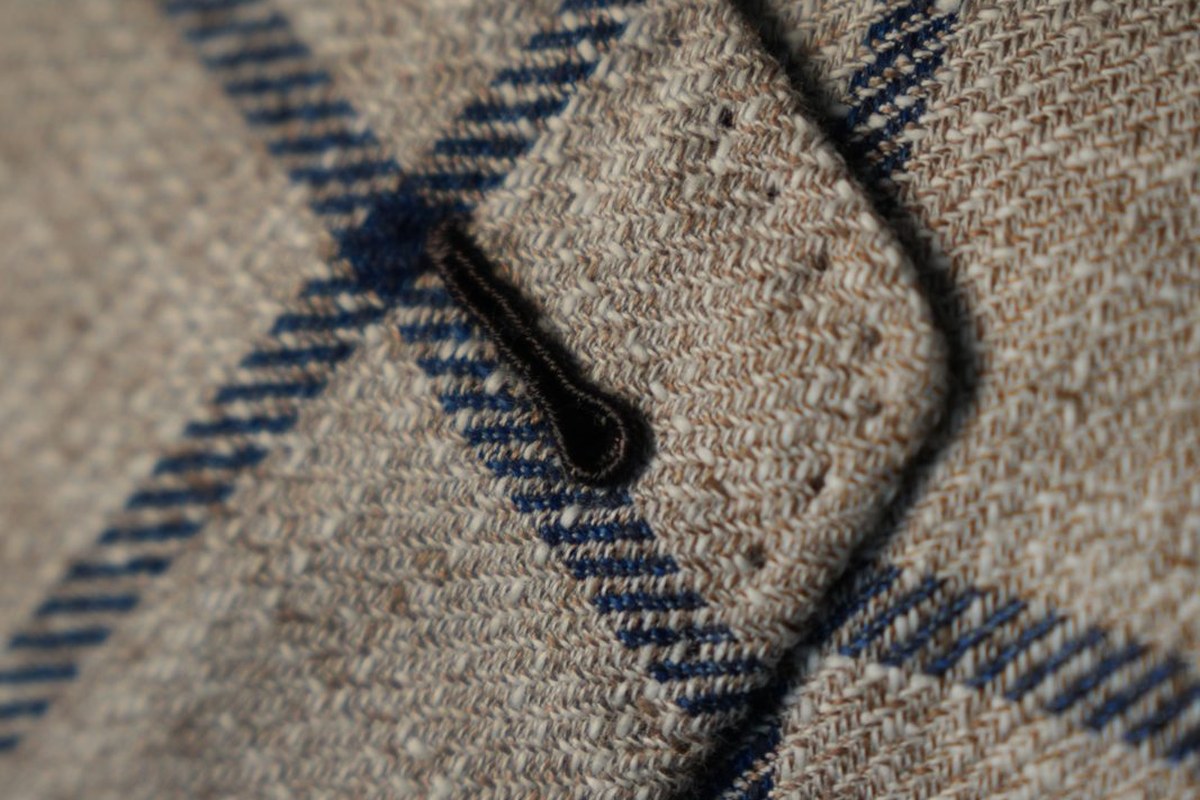
The impression a suit makes at first glance comes less often from its colour than from the way its cloth catches the light, how it sits across the shoulder and how it behaves in movement. A well-chosen suit cloth is not merely a question of aesthetics. It determines your comfort at the end of the day, the shape of the garment and the quiet conviction of your personal style.
In ready-to-wear, the choice of cloth is usually constrained by production speed and a price target. In bespoke tailoring, the cloth is weighed together with the silhouette, the client's way of life, the season, the frequency of wear and the character of the occasion. That difference shows itself above all in daily business meetings, at formal receptions and on long journeys.
What does suit cloth determine?
Cloth does not merely create the surface of a suit. Its weight governs how the chest of the jacket is built, how far the trousers hold a mark at the knee, the shape of the lapel and the fluency of the whole silhouette in movement. The same cut takes on an entirely different character in a different cloth.
A light wool of open weave can feel freer and more breathable. But a very fine material is not always the right choice for intensive daily wear. A medium-weight wool of denser weave, by contrast, holds its shape well, resists creasing better and becomes the more rational choice for year-round use.
The weave also affects the appearance. A smooth worsted wool looks cleaner, more formal and more precise. Flannel has a softer surface and a deeper sense of colour, and lends a quiet weight in cool weather. An open-weave wool of the fresco type is distinguished by its breathability in hot weather, although its textured surface may not always be considered suitable for the most formal evening occasions.
Fibre content: quality beyond the label
When suit cloth is discussed, the first question is often “is it 100 per cent wool?” That is an important indicator, but on its own it is not enough. The origin of the wool, the length of the fibre, the twist of the yarn, the density of the weave and the finishing of the cloth matter at least as much as the composition.
High-quality merino wool remains the principal material for a suit. Its natural elasticity gives freedom of movement, it regulates temperature and, with proper care, it holds its shape for a long time. What distinguishes cloth houses such as Loro Piana, Dormeuil, Scabal, Zegna, Piacenza 1733, Drago and Reda is not their names alone but precisely their attitude to these technical subtleties.
Wool blended with cashmere gives a softer handle and a richer surface. As the proportion of cashmere rises, however, the cloth’s resistance to everyday friction can decline. Such a cloth is a very refined choice for suits worn seldom, for particular meetings and for seasonal suits. For a suit that will be worn every day in the rhythm of office, car and travel, high-quality pure wool, or wool made with a small amount of a strengthening fibre, may be the more sensible option.
Linen is among the natural choices of the summer season. Its creasing is not a flaw but the character of the material. In a strictly formal corporate setting, however, the relaxed look of linen does not suit every taste or every meeting. Wool-linen-silk blends strike a balance between these two worlds: the lightness of linen, the discipline of wool and the fine lustre of silk come together.
The right balance between weight and season
The weight of a cloth is usually expressed in grams per metre (g/m). The figure may look technical, but for the real use of a suit it is a very practical indicator. Cloths in the range of roughly 240-270 grams are comfortable in warm weather and for those often on the move. The 280-330 gram range, meanwhile, often gives a more universal result for Baku’s changeable seasons.
A heavier cloth can create a more expressive drape in the jacket, that is, a fuller and more orderly fall over the body. It can also resist the formation of creases in the trousers better. In return, it can reduce comfort in warm interiors and on long summer days. The right choice here is not to select the “lightest” or the “most expensive” material, but to assess honestly where and how often the suit will be worn.
For many clients, the most sensible approach is to have the first suit made in a medium-weight navy or charcoal grey wool that can be worn in all four seasons. In later commissions it is then possible to move to flannel, fresco, a linen blend or finer evening cloths according to seasonal needs.
How colour and pattern relate to the material
The colour of a cloth can behave differently from the way it appears in the book. Light, the density of the weave and the surface character of the fibre can make the same navy tone look deeper, brighter or more matt. For this reason the choice of cloth should not end with a glance at a small swatch. Assessing the swatch in natural light and, where possible, alongside the shirt and shoe tones you are wearing gives a truer result.
Plain navy and charcoal grey cloths form the foundation of a business wardrobe. They adapt easily to different shirts, ties and shoes. A fine stripe is a more assertive choice that emphasises the vertical line of the silhouette, though in certain formal settings it can look excessively severe. Micro-patterns and fine textures, by contrast, create character at close range while reading as quiet and professional from a distance.
It is a mistake to confuse a lustrous surface with high quality. Excessive sheen often makes a material look synthetic. True refinement lies in the natural, controlled play of light that appears as the cloth moves.
How should the Super numbers be read?
Figures such as Super 120s, Super 150s or Super 180s indicate the fineness of the wool fibre. As the number rises, the cloth can feel softer and finer. But a higher Super number does not automatically mean a better suit.
Super 150s and finer cloths are distinguished by their delicate handle and their beautiful fall in evening wear. Against that, for daily use, frequent travel and a demanding working schedule, a quality wool from Super 110s to 130s is often more durable and more practical. The construction of the weave, the weight and the finishing of the cloth give a broader picture than the Super figure alone.
When commissioning a suit, the right question is not “how fine is this cloth?” but “how will this cloth behave in my rhythm of wear?” An experienced tailor answers that not from the cloth book alone but from your everyday needs.
Cloth and cut are not separate matters
A balance has to be struck between a soft flannel and a sharp, heavily structured jacket. The same rule applies to a light summer cloth: a heavy internal construction can undermine its advantage in breathability. When cloth and cut do not complement one another, even the finest material cannot show its full potential.
The value of a bespoke commission becomes clear precisely here. Taking the measurements, establishing the shoulder line, the button position, the shape of the lapel and the choice of cloth are considered as a single decision. At Atelier Baku 1984 this process is shaped by the client’s build alongside his working environment, how often he travels and what he expects from the garment.
Care is a continuation of the choice of cloth
A quality suit does not require dry cleaning after every wearing. On the contrary, excessive cleaning can shorten the life of the natural fibre. Resting the suit on a broad-shouldered hanger after wear, emptying the pockets and brushing it with a soft brush when needed is usually enough.
Not wearing the same suit on consecutive days allows the cloth to recover its shape. The light creases that form in the trousers and at the elbow of the jacket diminish considerably after a single night of proper rest. These simple habits help to preserve the advantage the finest cloth gives for years.
For your next suit, do not rush to the first striking swatch in the book. Touch it, watch it in the light, think about your daily rhythm and judge not only how the cloth looks today but how it will live a year from now.