

How should the shoulders of a suit fit?
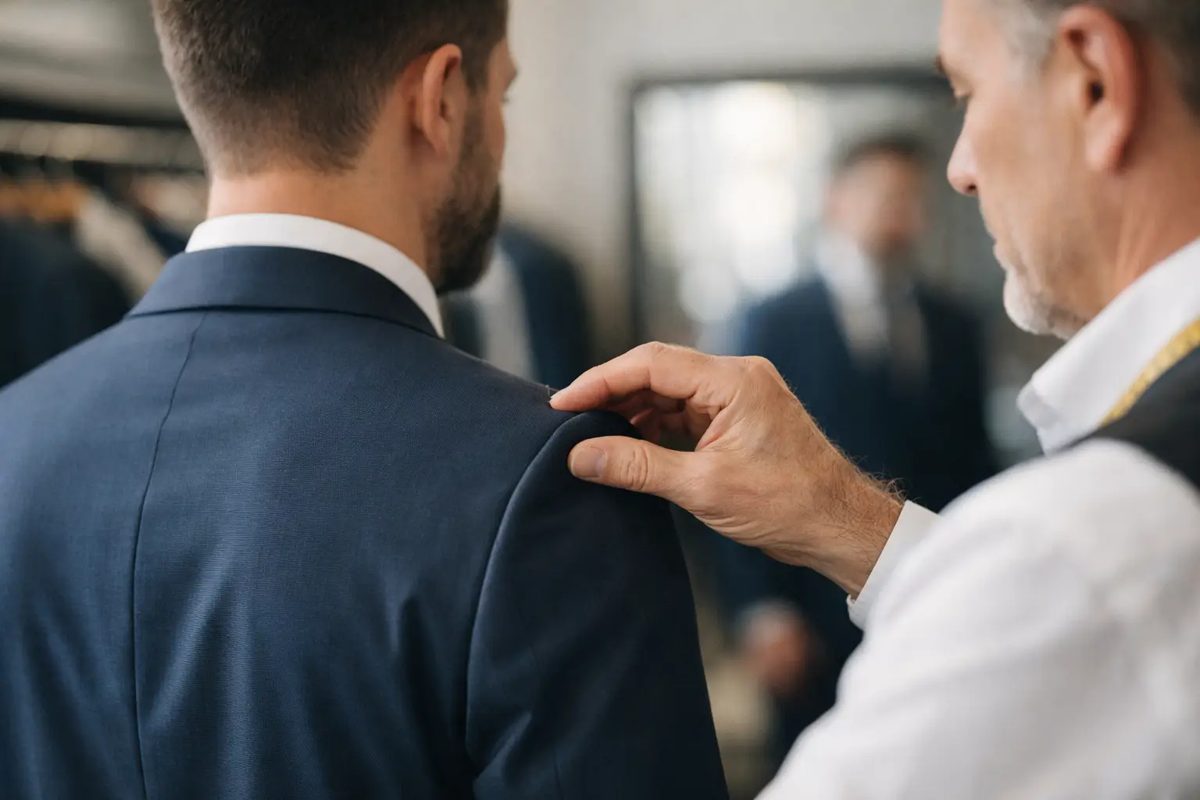
The impression a suit makes at first glance is often determined not by its cloth but by its shoulder line. When the shoulder fit of a suit is precise, the chest, the collar and the sleeves look natural; when it is wrong, even the most precious Loro Piana or Dormeuil cloth can look foreign on the body. This detail determines more than appearance: ease of movement, the jacket's ability to keep its shape and the posture of its owner.
The shoulder is the most stable part of the human body, and yet the hardest to standardise. Height, chest circumference and waist measurement can to some extent be expressed in numbers. The shoulder, however, must be read together with the angle of the neck, the shape of the back, the forward or backward position of the arms and even daily habits of posture. This is precisely why the shoulder is one of the areas that demands the most compromise in ready-to-wear clothing.
Why is the shoulder fit of a suit the principal criterion?
The shoulders of a jacket are its frame. How the collar sits on the neck, how the chest panel opens and how the sleeve moves all begin with the shoulder construction. If the shoulder seam is not in the correct position, the tailor cannot fully remove the problem later by taking in the waist or shortening the sleeve.
In a correct fit, the shoulder seam sits close to the point where the natural shoulder bone ends. This does not mean the seam must fall on that bone with absolute millimetre precision. The style, cloth and construction of the jacket may allow a certain margin. But if the seam hangs down over the arm, the shoulder is already too wide; if it is pulled towards the neck, the jacket is too narrow.
This difference is especially clear at formal meetings and in photographs. A wide-shouldered jacket makes its owner look as if he were wearing someone else's clothes. A narrow shoulder, on the other hand, constricts the arms, creates tension at the neck and gives even the calmest posture an uncomfortable expression.
How to recognise the correct shoulder line
Checking only while standing straight in front of the mirror is not enough. After putting on the jacket, one should make natural movements such as stretching the arms forward, sitting down and picking up a phone or a document. In tailoring, a good fit reveals itself not in a motionless pose but in the daily rhythm.
The collar should sit quietly at the back of the neck, without creating a gap or bunching there. The cloth should fall smoothly from beneath the shoulder seam towards the arm. If there are deep creases or pulling around the armhole - the point where the sleeve joins the jacket - the matter may lie not only in the sleeve length but in the shoulder angle or the setting of the sleeve.
The shoulder pad also calls for attention. In classic English tailoring, a more expressive, structured shoulder line is natural. In the soft Italian construction, the shoulder can look lighter, sometimes almost unpadded. Both approaches are elegant when correctly executed. The choice depends on build, working environment and personal aesthetics.
The excessively wide shoulder
When the seam extends well beyond the natural shoulder point, excess cloth gathers at the upper part of the sleeve. As the arms move, the jacket separates from the body and the armhole drops. This is felt more quickly in light wool, cashmere blends and softly constructed jackets in particular.
Sometimes a client confuses a wide shoulder with a more powerful silhouette. In truth, a strong silhouette comes not from the artificial width of the shoulder but from the right balance. When there is a correct proportion between chest, waist and shoulder, the jacket looks calm yet decisive.
The excessively narrow shoulder
A narrow shoulder is the more serious problem. It can create pulling towards the neck at the collar, horizontal creases across the back and restriction when bringing the arms forward. When the armhole is constricted, the client often thinks the jacket is too tight at the chest, whereas the real cause is that the width and angle of the shoulder do not correspond.
Correcting this flaw after purchase is usually difficult. Rebuilding the shoulder area requires intervention in the jacket's lining, sleeves, collar and chest construction. In a ready-to-wear suit this operation may be both risky and economically unjustified.
The shoulder angle and the body's individual language
Two men having the same shoulder width does not mean they will wear the same jacket comfortably. One may have squarer shoulders, the other more sloping ones. In one, the right shoulder may look different from the left because of carrying a bag every day, sport or a habit of posture. The forward position of the neck, the width of the back and the opening of the chest also affect the cut.
The value of bespoke tailoring lies precisely in these observations. Taking measurements is not simply recording numbers with a tape. The tailor observes the balance of the body, reads the slope of the shoulder and takes into account the relationship of the arm to the body. When the cut is built on that information, the jacket looks not like cloth resting on its owner but like a continuation of his proportions.
This is also where the importance of the personal consultation and the fitting stage at Atelier Baku 1984 comes from. Small differences invisible at the first measurement become clear during the fitting: a half-centimetre adjustment at one shoulder, the angle of rotation of the sleeve or the fineness of the pad can have a serious effect on the final silhouette.
How does cloth change the shoulder fit?
Cloth does not replace construction, but it changes its behaviour. A densely woven, high-twist wool holds the shoulder line more clearly and gives a clean appearance for business jackets. Soft flannel, cashmere or silk-blend cloths are more fluid, so if excessive stiffness is chosen in the construction, an unnatural result can arise.
Climate and purpose of use must also be considered. In a light cloth chosen for the hot season in Baku, keeping the shoulder pad and the inner layers heavy can reduce comfort. On the other hand, a very soft construction may not give the precision desired for formal protocol, a presentation or an evening event. The right choice requires balance between the cloth and the purpose of the jacket.
The difference between a ready-to-wear suit and bespoke cut
A ready-to-wear manufacturer offers an average size for many body types. This approach is practical, but it creates limitations in a key area such as the shoulder. A size 50 of a given model may fit in terms of chest and waist, but the shoulder slope, the armhole and the structure of the back may not belong to its owner.
In the made-to-measure approach, an existing pattern is adapted to the body. For many men this gives a noticeable result, especially in shoulder width and sleeve length. In the bespoke process, the pattern is made from nothing for the client's particular body. Where there is asymmetry, a distinctive posture or complex proportions, this difference becomes all the more valuable.
Not every client needs a bespoke commission. For a man whose body is relatively standard and who wants a frequently refreshed working wardrobe, a good made-to-measure cut can be an entirely correct choice. But where there is a difference between the shoulders, an unusual posture or a requirement for a faultless ceremonial appearance, the precision given by an individual pattern shows itself plainly.
Questions to ask at the fitting
At the fitting, do not settle for looking at the jacket from the front alone. Ask the tailor to explain the contact of the collar with the neck, the position of the shoulder seam and the allowance for movement in the armhole. Raise your arms freely, sit down and move naturally. The jacket should respond to movement, not force you to treat it with caution.
At the same time, expecting a completely crease-free picture at the first moment is not the right criterion. The human body moves, and so does the cloth. The aim is not to eliminate every crease; it is to create a natural silhouette, free of pulling, excess cloth and imbalance.
A good shoulder fit is not a noisy detail. It does not put itself on display; it simply shows that the jacket belongs to you. When choosing your next suit, look first at the shoulder: the right beginning changes the level of the entire cut.