

How to choose an overshirt
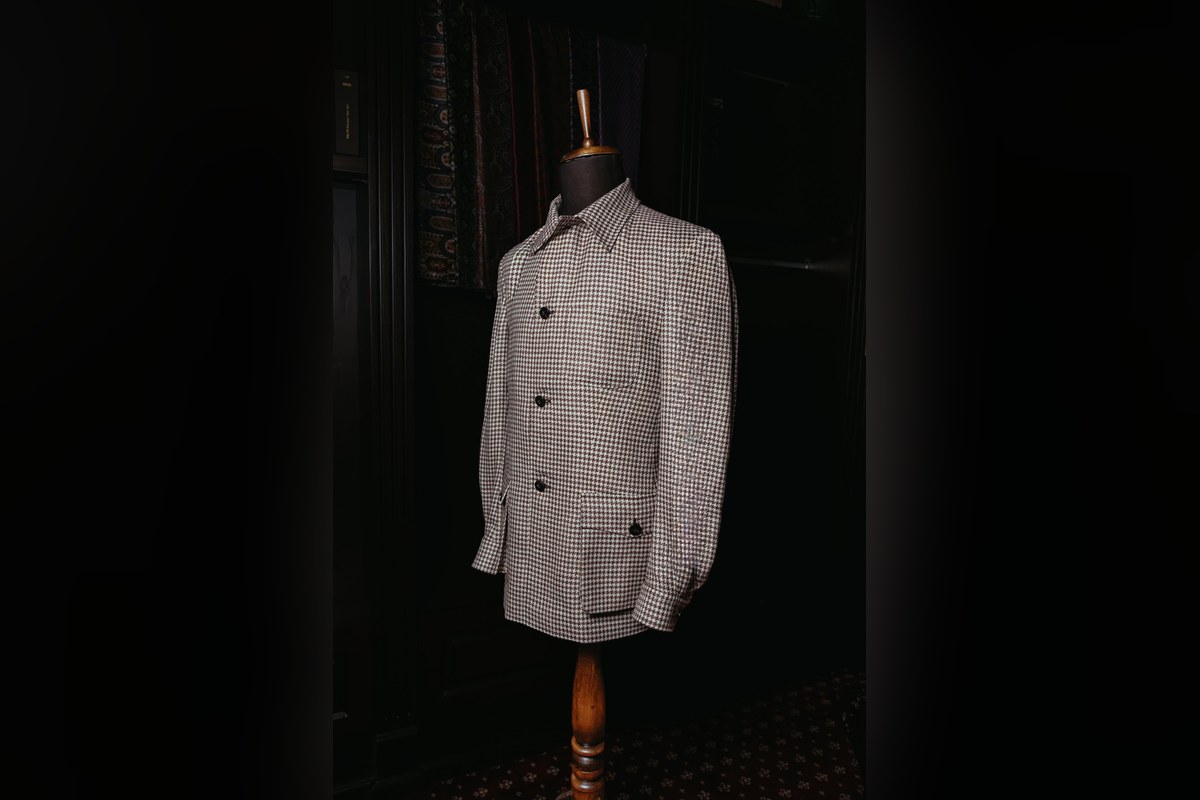
Autumn in Baku is long and changeable. Mornings are cool, and by midday a jacket already feels heavy. On days like these a wardrobe badly needs a garment that is neither a shirt nor a jacket, yet does the work of both.
The overshirt fills exactly that gap. It is cut like a shirt but made from jacket cloth, and is worn over a shirt or over knitwear.
What an overshirt is
In appearance it keeps the collar, button row and cuffs of a shirt, but it is made from a heavier cloth and cut more generously. Its length usually falls between that of a jacket and a shirt.
Unlike a shirt it is not tucked in, and it can be worn open. Unlike a jacket its collar does not roll, and there is no shoulder pad or canvas, so it sits lighter and softer.
Collar, pockets and cuffs
The overshirt collar is a shirt collar, built a little wider and softer so that it does not look heavy in jacket cloth. It must sit correctly both buttoned and open.
Pockets are the most practical part of the model. Flapped patch pockets on the chest and below give the garment a workwear character, while neat hand stitching keeps it from looking rough.
The cuff fastens with a button, as on a shirt. This lets you turn the sleeve back a little, which is especially comfortable on a warm afternoon.
Cloth: weight and pattern
A very light shirting does not work for an overshirt: it will not hold its shape as an outer layer. A very heavy jacket cloth, on the other hand, loses the lightness of the model. Medium-weight wool and wool blends give the best result.
Oxygen Winter from the Cerruti mill falls well within this range: although intended for winter, it keeps its lightness. A small houndstooth in brown and white looks quiet from a distance and lively close to.
When an overshirt is made in a patterned cloth, matching the pattern across the pockets and the front edge needs special care. In a small pattern even a few millimetres of drift is plain to see.
Construction
In an overshirt the lining is usually placed only through the shoulders and upper back. This lets it slip easily over knitwear while keeping a neat finish inside.
The shoulder is sewn soft, like a shirt, but the fit is built to individual measurements. The back width and sleeve length are calculated for an outer layer: if a sweater will be worn underneath, this is taken into account at the first measuring.
What to wear it with
An overshirt can be worn over a plain shirt, a polo or fine knitwear. The most natural pairing is with flannel, wool or dark denim trousers.
Loafers, suede boots or soft derbies work well. At Atelier Baku 1984 the overshirt is made to individual measurements; the lead time is up to four weeks.