

The foundations of a luxury men's wardrobe and the right choices
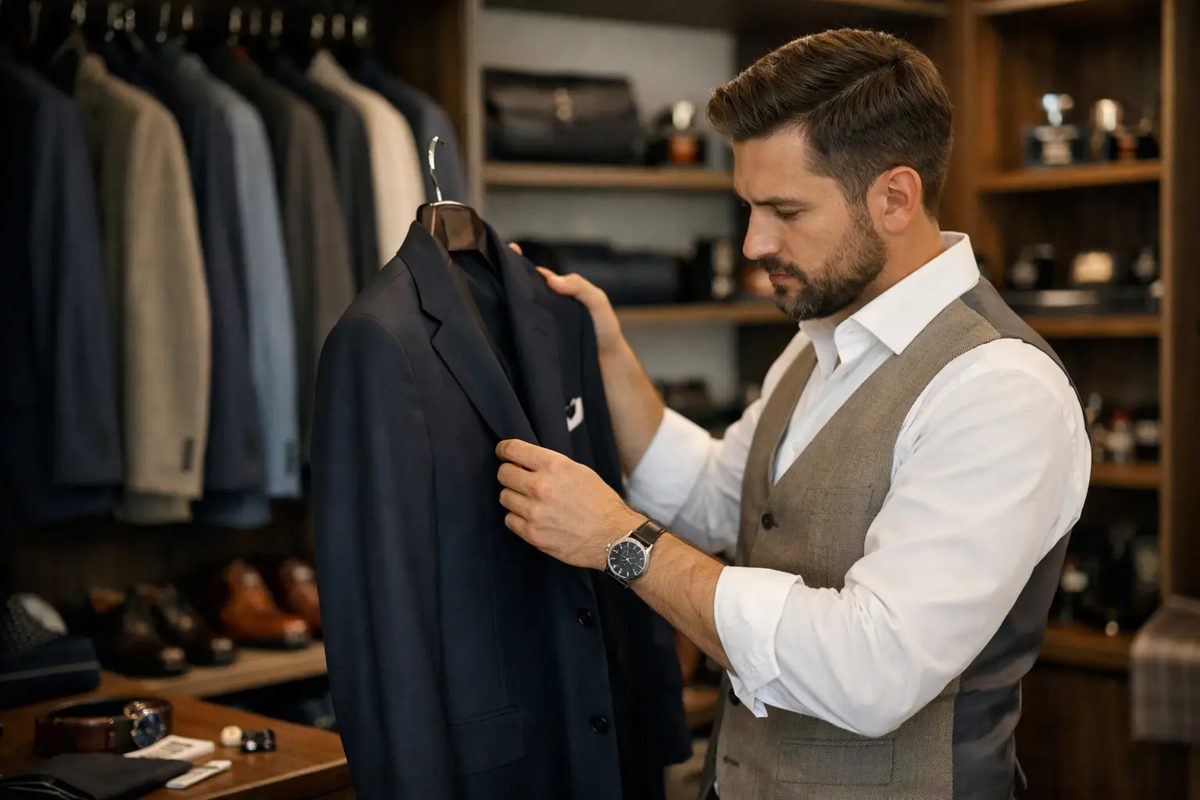
In the boardroom, at an official reception or at a private lunch, the first thing people notice about a man is not the brand of his suit but how it sits on him. The foundations of a luxury men's wardrobe begin with exactly this distinction: choices that do not catch the eye, yet in which quality is felt in every detail. The aim is not to accumulate a large number of garments, but to build a system that looks equally assured in different settings and suits its owner's way of life.
The priority in a luxury men's wardrobe: fit and cloth
The value of a wardrobe is determined first of all by cut, not by the label. Even an expensive suit loses its effect when the shoulder line does not sit in its natural place, the collar stands away from the neck or the trousers are excessively wide. Conversely, a quietly coloured suit fitted precisely to the body changes its owner's bearing and entire silhouette.
Cloth is the character of that fit. High-twist wool gives a neat appearance and resilience for the rhythm of daily work. Fine wools such as Super 120s or Super 150s offer a softer hand, but they are not always the most practical choice for a suit that will be worn at the same intensity every day. The right choice here depends on the working schedule, the number of journeys and how often the garment is worn.
The advantage of cloth houses such as Loro Piana, Dormeuil, Scabal, Drago, Reda, Piacenza 1733 and Zegna lies not only in their names. Their collections take into account the origin of the fibre, the density of the weave, the weight and the drape. In Baku's climate, a mid-weight, breathable wool is very often the most measured investment for the greater part of the year.
The suit: the wardrobe's principal construction
Two suits can be enough for a well-built wardrobe, provided they are chosen correctly. The first should be dark blue, the second charcoal grey. These tones allow broad use, from business meetings to evening invitations, and work easily with a variety of shirt, tie and shoe combinations.
The advantage of the dark blue suit
A dark blue suit is more versatile than a black one. With a white or light blue shirt it looks formal; with a light grey or finely striped shirt it creates a softer impression, closer to personal style. For a diplomatic meeting, a presentation or important negotiations, it manages to convey seriousness without looking severe.
For the first suit, a simple two-button front and a lapel of measured proportions are the longer-lasting choice. Excessively narrow lapels and a very short jacket do not stay relevant for long. Classic proportion is the most reliable principle of a wardrobe independent of fashion.
The role of the grey suit
A charcoal grey suit makes a deep and calm impression, especially in a formal working environment. Compared with dark blue it looks more serious, which makes it apt for first official meetings and for settings connected with law, finance and state protocol. Light grey is a useful alternative for the spring-summer season, but it should not come before the principal business suit.
The construction of the suit should also be a personal choice. The soft-shouldered Italian style looks more relaxed and natural. A more structured shoulder may suit men whose position calls for formality and a strong silhouette. Both approaches can be of high quality; what matters is that they correspond to the wearer's build and the setting in which the suit is worn.
Not the number of shirts, but the quality of collar and cuff
The shirt is the most-used and often the least-considered part of the wardrobe. The first choices should be white and light blue cotton shirts. A white shirt is a flawless base for formal events, dark suits and evening engagements. Light blue creates a softer and more comfortable alternative for everyday business dress.
The collar of a shirt should sit fully against the neck. When buttoned, room for two fingers is sufficient; a wider gap weakens the whole appearance. The cuff should end at the base of the wrist and show roughly a centimetre beyond the jacket sleeve.
In cloth, long-staple cotton in a poplin or twill weave is a good choice. Poplin looks cooler and crisper, while twill is softer and hides creases somewhat better. For a man who travels a great deal, twill can be practical, but on hot days a light poplin feels more comfortable.
Shoes and belt: silent signs of standing
A suit does not rescue an appearance let down by poor shoes. It makes sense to begin with a dark brown leather oxford or derby, and then a black oxford. A dark brown pair offers more combinations with dark blue, grey and beige tones. A black oxford is essential for strictly formal settings, a black-tie invitation and a dark grey suit.
The shape of the shoe should be neither excessively pointed nor thick-soled. The quality of the leather, the neatness of the stitching and proper care are felt at first glance. Rotating shoes, keeping them on shoe trees after each wearing and applying cream regularly extends their life considerably.
The belt should be chosen close to the colour and character of the shoe leather. Buckles with large logos, bright metal details and very wide belts disturb the calm balance of a classic wardrobe. High quality is very often the detail that says the least.
Knitwear and outerwear resolve the transitional seasons
A dark blue or grey crew-neck in fine merino wool, worn over a shirt, lightens a formal look. A V-neck may be more suitable for combinations with a tie. Cashmere feels softer and more refined, but it demands careful maintenance for sustained use. It is more sensible to choose it only for a wardrobe whose owner understands the delicacy of the material and has the means to store it properly.
In outerwear, a dark blue or charcoal grey wool overcoat is a long-term choice. The coat should cover the hem of the jacket, not constrict the shoulders and not hinder movement. Short, very narrow or excessively decorative models may create a seasonal effect, but they do not form the basis of a wardrobe.
Ties and accessories: measured individuality
A tie should work with the suit, not in front of it. Silk ties in dark blue, burgundy, dark green and fine patterns are sufficient for most business combinations. A seven-fold tie made of Como silk creates a more natural knot and a richer body thanks to its unlined or minimally lined construction. This detail is visible only at close range, but for the knowing eye it makes a difference.
The pocket square should not be chosen in the same cloth and pattern as the tie. A white linen pocket square gives an elegant solution for almost every formal combination. Accessories such as a watch, cufflinks and spectacles obey the same rule: functional, proportionate and unpretentious.
The place of bespoke tailoring in the wardrobe
Ready-to-wear is sometimes practical for an urgent need, but a standard size never resolves the fine differences of every build. Shoulder width, the ratio of chest to waist, arm length and posture together affect the look of the jacket. The made-to-measure approach adapts these measurements on an existing pattern, whereas bespoke is based on creating the pattern directly for the client's silhouette.
Which route is right depends on expectations. For a man who wants a shorter timeframe and a defined model, made-to-measure can be suitable. For a client whose proportions fall outside the standard, who wants to build a long-term wardrobe and who pays particular attention to construction, bespoke is the more logical choice.
At Atelier Baku 1984, this process begins with a personal consultation: measurements, cloth, construction and the scenario of use are considered together. The ultimate aim is not merely to make a good suit, but to create clothing that looks natural in the daily rhythm of its owner.
Caring for the wardrobe is as important as choosing it
When quality clothing is not properly cared for, its advantage is quickly lost. Rather than sending a suit for dry-cleaning immediately after every wearing, it is better to air it and let it rest on a good hanger. Cleaning should be done only for stains or genuine need, since excessive processing tires the fibres of the cloth.
Shirts should be washed correctly, shoes kept on shoe trees, and knitwear never hung. These simple habits protect not only the look of the wardrobe but also its useful life.
In your next choice of clothing, think about the purpose before the quantity. What you need most may not be a new colour, but perhaps a dark blue suit that sits precisely on your shoulders, a white shirt with a better collar, or the right leather shoes that gain character over the years.