

How to choose among premium shirting fabrics?
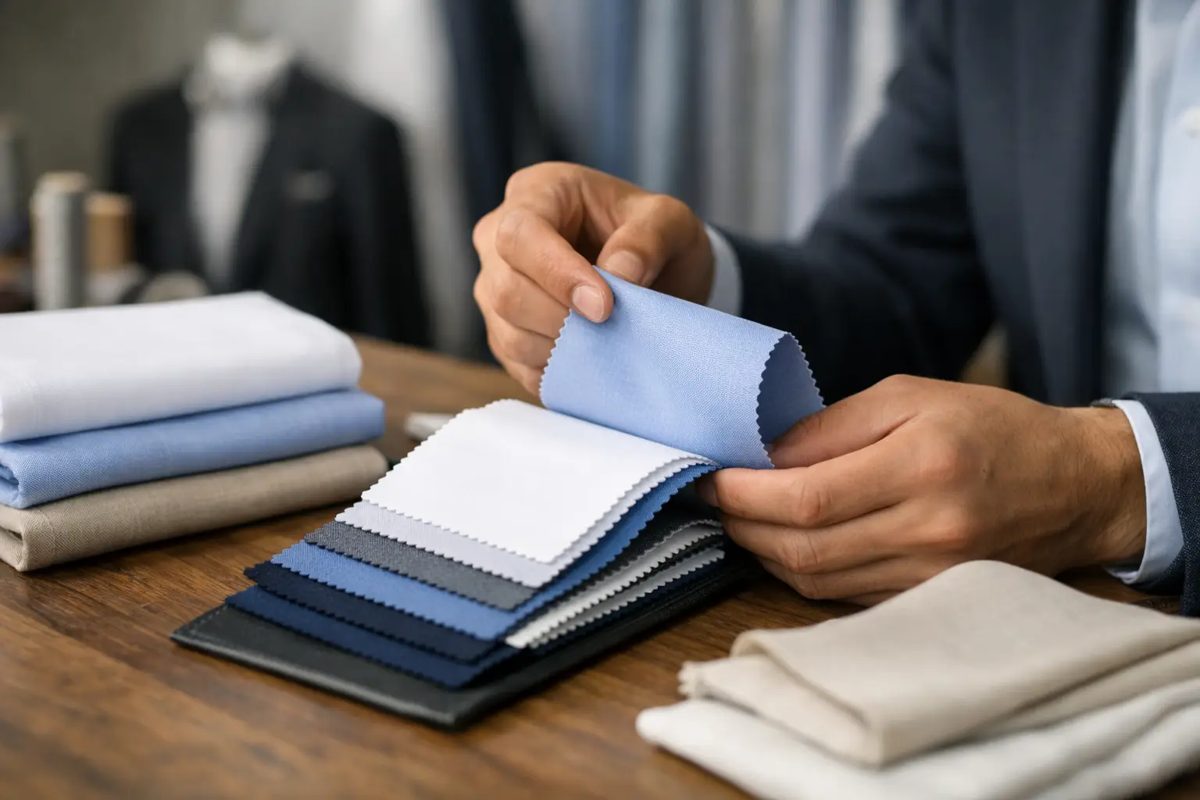
The quality of a white shirt is seen from a distance first in the stance of the collar, and at close range in the quiet order of the cloth. The difference between premium shirting fabrics is not merely a matter of weave: the cloth determines comfort through the day, the appearance after ironing, the behaviour beneath a suit and how the shirt will age over the years.
When choosing for a personally made shirt, one should look at the quality of the fibre, the fineness of the yarn and the weave before the colour. The same shade of blue can create an entirely different impression in two different cloths. One will look precise and neat for a formal meeting; the other will carry a softer, easier and less formal character.
What makes premium shirting fabrics different?
Premium cloth does not simply mean a high yarn count. The finer the yarn, the more delicate and smooth the cloth usually is, but this is not considered the right choice for every circumstance. How often the shirt is worn, the climate, the wearer's build, the shape of the collar and the weight of the suit that accompanies it should all be taken into account together.
The best cotton cloths are made from long-staple cotton. When the fibre is long, the yarn is spun more evenly, less fuzz appears on the surface and the cloth feels cleaner to the touch. Two-ply yarn gives the shirt additional strength, stability of shape and a subtle lustre. Nevertheless, a very fine cloth is not always more durable. For a frequently worn business shirt, a well-woven twill of medium density is sometimes more sensible than a very fine poplin.
The finish of the cloth also matters. A light, natural softness indicates the quality of the cloth, whereas excessive shine and an artificial slipperiness can sometimes be the result of aggressive chemical treatment. A quality shirting should feel refined at first touch and dependable in wear.
Poplin: clean lines and a formal look
Poplin, with its fine, dense plain weave, is one of the most classic shirting fabrics. Its surface is smooth, its appearance clean and its feel light. For a dark blue suit, a formal business meeting and an everyday wardrobe completed with a tie, white and light blue poplin are safe choices.
This cloth can also give comfort on Baku's hot days, especially when worn with a lightly constructed suit. But poplin can crease relatively quickly. If the travel schedule is intense and a flawless appearance throughout the day is the main requirement, twill is the more practical alternative.
The advantage of poplin is its calm. Plain, clean white poplin, together with the right cut and a good collar, looks distinguished without any additional emphasis.
Twill: softness, depth and practical comfort
Diagonal lines can be observed in the twill weave. This fine texture gives the cloth a softer hand, a slightly deeper colour and a sense of natural elasticity. Twill usually creases less than poplin, which makes it a strong candidate for long meetings, flights and a succession of appointments.
A white twill shirt, especially beneath dark wool suits, reflects light softly and looks fuller. Light blue, ice grey and finely striped twill variants create the necessary variety in an executive's everyday wardrobe. That said, a very heavy twill can feel warm in the summer season. Here the right weight and breathability are the main criteria.
Oxford and pinpoint: two faces of a textured classic
Oxford cloth has a visibly textured structure created by weaving yarns of two different colours or thicknesses. Classic oxford is more relaxed, more sporting and robust in character. It pairs naturally with a button-down collar, flannel trousers, knitwear and a blazer. In a formal working environment it should be chosen for days when the strictest protocol is not required.
Pinpoint oxford is the finer and neater member of the same family. It keeps the textured character of oxford but looks more compact and works more comfortably with a suit. For everyday professional use, a few pinpoint shirts can be among the most rational investments in a wardrobe.
Royal oxford offers a more refined lustre and a fine weave. This cloth can be suitable for dinner, a private reception or a formal daytime event. But rather than combining it with a very shiny tie or a lustrous suiting, balancing it with accessories of quiet texture gives a more tasteful result.
Herringbone, dobby and the role of subtle pattern
Textures that are distinct at close range yet remain calm from a distance raise the value of a personal shirt. Herringbone weave creates depth, especially in a plain-coloured cloth. Dobby cloths have small geometric patterns formed by the weaving method itself.
These choices give a shirt character when worn without a tie. A dark blue jacket, grey trousers and a white herringbone shirt create a more considered look without crossing the formal boundary. But if the suit itself is striped, checked or strongly textured, the shirt should remain quieter. In premium dress, what is desirable is not that every detail speaks at once, but that the right detail speaks.
Linen and cotton-linen: the right choice for hot weather
A linen shirt lets air through well and feels naturally dry and cool. It is indispensable for summer travel, seaside meetings, daytime events and a more relaxed dress code. Its creasing is not a flaw but the natural character of the cloth. Nevertheless, for a very formal presentation or a serious diplomatic meeting, a pure linen shirt may not always be appropriate.
A cotton-linen blend is the more controlled choice. It keeps the breathability of linen while benefiting from the neater appearance of cotton. This cloth is particularly logical for shirts worn with a jacket in the summer months. In colour, white, light blue, pale olive and natural beige tones suit the restrained nature of linen.
Choosing a shirt by its purpose
A collection of shirts should not consist of differences in colour alone. Working schedule, social environment and travel habits should guide the choice of cloth. For a man who spends most of the week in a suit, white and light blue poplin, twill and pinpoint form the main line. Oxford is added for more relaxed days, and linen for the weekend and the hot season.
The ceremonial shirt should be considered separately. For a black-tie dress code, a matt, fine and very clean white cotton predominates. Here the shape of the collar, the working of the front placket, the choice of cuff and the quality of the buttons are as important as the cloth. A wrongly chosen shiny cloth can undo the restraint of the finest tuxedo (dinner jacket).
The advantage of a personal commission is that the cloth is chosen not only for the body's measurements but for the way of life. At Atelier Baku 1984, this choice is assessed together with the height of the collar, the construction of the cuff, ease at the shoulder and the behaviour of the shirt beneath a suit. The aim is not a shirt that looks good in a shop window, but one that makes its owner's day more comfortable and more precise.
Test the cloth with your hand, examine it under the light and think about which day, with which jacket and at what pace you will wear it. The right shirting does not ask for attention at first glance, but at every meeting it speaks of quality on your behalf.